DIY Line Un-Winder

I fish braided line when targeting trophy fish. Since braided line is expensive, I re-use the “rear section” of the braided line on my large saltwater reels on my smaller freshwater reels. Hence, I have developed a simple DIY Line Un-Winder.
Fish360 DIY Line Un-Winder

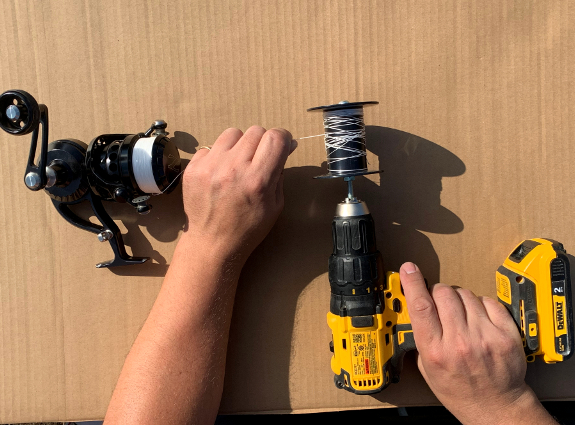
In order to make this DIY Line Un-Winder, you need an empty 1/4 lb spool, a 6″ long bolt, two flat washers, and a nut. First, secure the bolt through the empty spool. Second, attach the exposed end of the bolt to a power drill. Third, secure the line on your reel to the empty spool via tape. While holding the drill with one hand, use your other hand to keep tension on the line as you guide the line onto the spool. This ensures that the line fills the spool tightly and evenly.

Once the line is removed from the larger reel, repeat this process to transfer the line to another empty 1/4 lb spool. This will “reverse” the line. You can then use this second spool to fill your smaller capacity reel with braid that was hardly ever used on the larger reel (the “rear section”). The remainder of the braided line can be used for other DIY projects. 🙂

In addition to saving money, this low cost DIY Line Un-Winder also helps to save the environment. Build yours today and start reeling in the $avings!


Facebooktwitterlinkedin

DIY Tweezers Lanyard

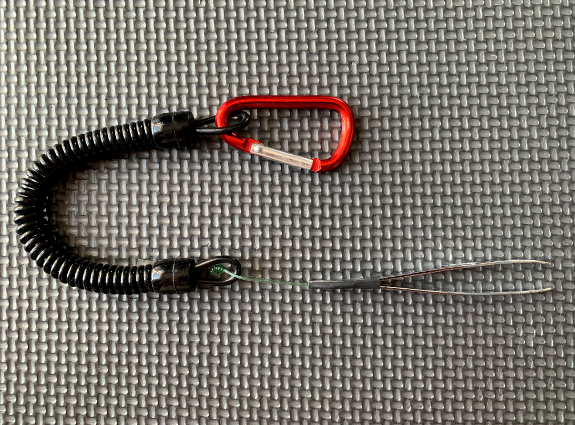
Tweezers are a great tool for precision work like collecting scale samples from fish. Unfortunately, tweezers easily hide in nearly unreachable cavities in my surf bag, kayak, and tackle box. Tweezers also jump out of my hand while I am trying to carefully collect scale samples from a nervous fish. I have hence developed a simple method to join tweezers to a lanyard.

Fish360 DIY Tweezers Lanyard

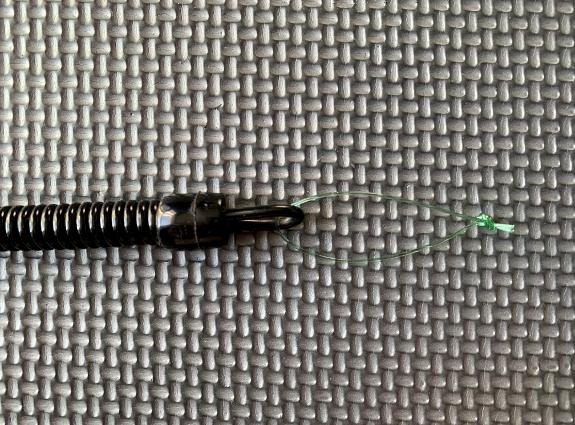
Attaching tweezers to a lanyard is simple and only requires inexpensive tools and materials. First, secure a 2″ 50 lb monofilament loop to the end of a lanyard via Double Surgeons’ Loop Knot.

Fish360 DIY Tweezers Lanyard

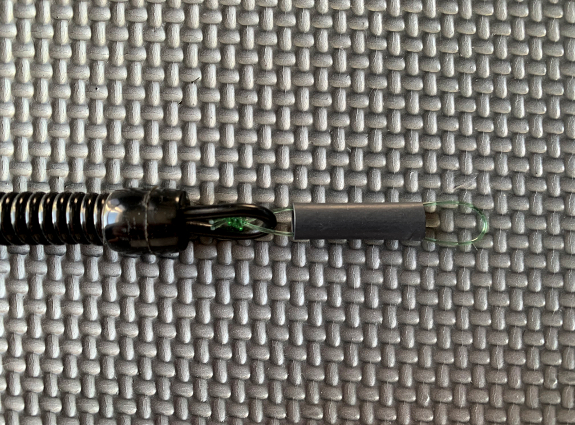
Second, insert the monofilament loop through an appropriately sized heat shrink tubing (e.g. 1″ length | 3/16″ diameter).

Fish360 DIY Tweezers Lanyard

Third, pass the monofilament loop all the way up between the tweezers’ arms.

Fish360 DIY Tweezers Lanyard

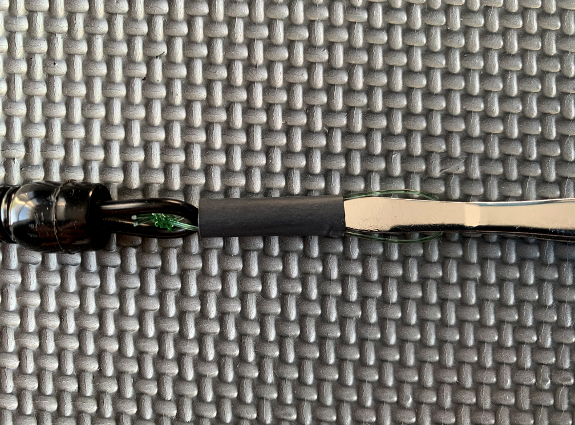
And lastly, slide the heat shrink tubing onto the tweezers and apply heat.

Fish360 DIY Tweezers Lanyard

This simple solution keeps my tweezers secure and accessible at all times. The less time I take to collect scale samples for the Sportfish Angler Data Collection Team (SADCT), the faster the fish recovers. Time is fish!

Facebooktwitterlinkedin

DIY Surf Cart Sand Spike Holder

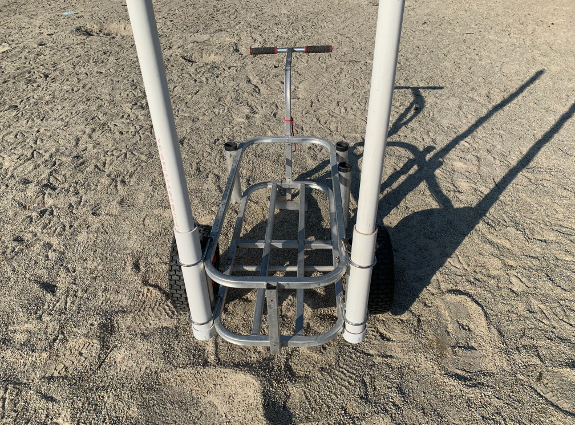
I use 5 foot PVC sand spikes (1.5″ diameter) when chunking the surf. I secured them under crisscross bungee cords that kept my gear inside my surf cart. This method worked well, but it took time. Hence, I have developed a new sand spike holder for my surf cart.

Fish360 DIY Surf Cart Sand Spike Holder

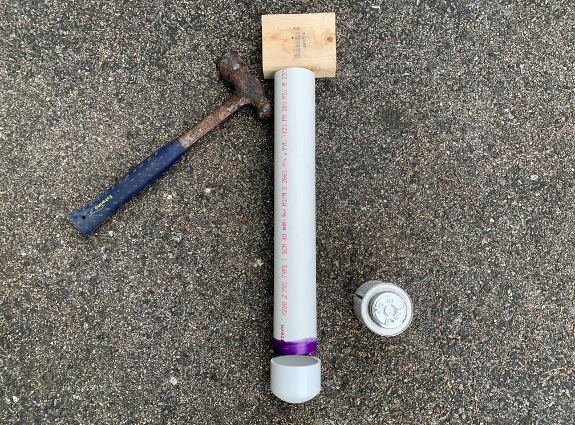
Making your own surf cart sand spike holders is easy. You only need some simple tools and materials. First, measure and cut a length of 2” PVC pipe such the the 2” end cap is just below the bottom of the cart and the top of the pipe is 4.5” above the cart. This is the optimal length to support the sand spike while in transit. Prime one end of the 2″ PVC pipe and let dry.

Fish360 DIY Surf Cart Sand Spike Holder

Apply some PVC adhesive to the primed end of the PVC pipe and insert it into a 2″ PVC cap. Place a piece of scrap wood on the other end of the PVC pipe and hammer the pipe into the end cap. Repeat for the second sand spike holder.

Fish360 DIY Surf Cart Sand Spike Holder

Mount the sand spike holder to the side of your cart via stainless steel U-bolts (e.g. 5/16″ x 2 1/2″ x 5″). To ensure that the nuts do not loosen while in transit, I used 5/16″ stainless steel split lock washers. Make sure that the U-boots are facing towards the tires so that you do not snag your pants or waders as you walk around the cart.

This surf cart sand spike holder works exceptionally well. Storing my sand spikes now takes seconds, not minutes. The less time I spend packing my gear between spots, the more time I fish. Time is fish!

Facebooktwitterlinkedin

DIY Hybrid Frog Tackle Box II

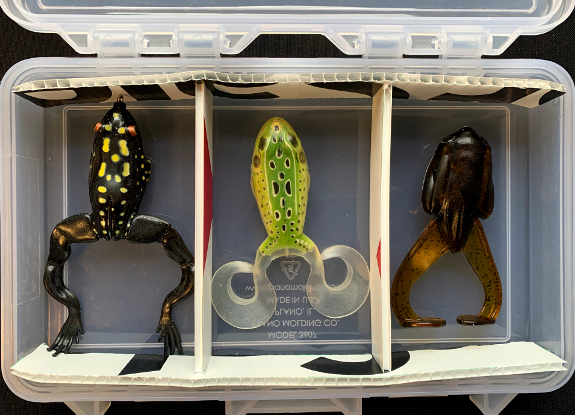
I re-purposed one of my Plano boxes that I was not using because the internal dividers did not work for me. This storage solution stores my hybrid frogs really well. But! I feel strange buying new Plano boxes so that I can modify them via high speed rotary tool. Hence, I purchased an open compartment utility box form Plano and made my own internal dividers.

Fish360 DIY Hybrid Frog Tackle Box

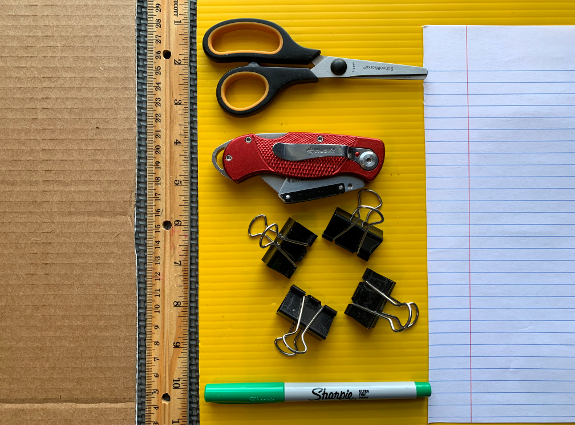
Making your own internal dividers is easy. You only need an open utility box, a sheet of paper, cardboard, and a recycled corrugated vinyl sign. In addition, you also need some simple tools: ruler, scissor, utility knife, fine tip Sharpie, and two clips.

Fish360 DIY Hybrid Frog Tackle Box

First, make two templates for the inner dimensions of your box via paper and scissors. One template for the length and height and one template for the width and height.

Fish360 DIY Hybrid Frog Tackle Box

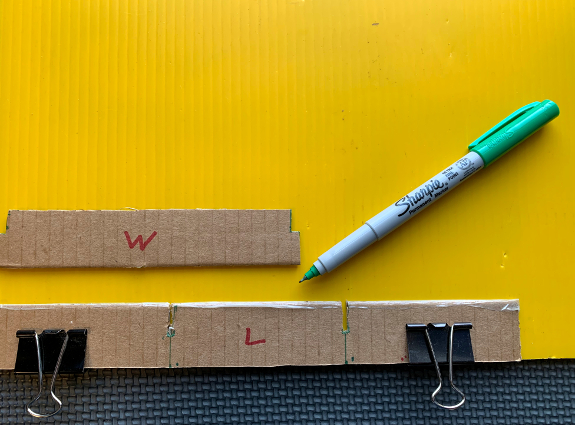
Second, place the paper templates onto cardboard and secure them via clips. Trace the outline of the templates onto the cardboard via fine tip Sharpie. Cut along the Sharpie lines via utility knife. Be sure to have a piece of scrap plywood (or a similar material) underneath the cardboard so that you do not damage the underlying surface.

Fish360 DIY Hybrid Frog Tackle Box

Third, make the interlocking slots on the “length” cardboard divider template. Divide the length of the template into three equal segments and mark it via fine tip Sharpie. At the two marked interlocking points, cut slots to half the height of the divider and to the width that will accommodate the thickness of your corrugated vinyl sign.

Forth, make the interlocking slots on the “width” cardboard divider templates. At each end of the the template, cut slots to half the height of the divider and to the width that will accommodate the thickness of your corrugated vinyl sign.

Fifth, place the cardboard templates on your vinyl sign such that the internal ribs are perpendicular to the templates. Secure the cardboard templates to the vinyl sign via clips. Trace the templates onto the sign via via fine tip Sharpie. Cut along the Sharpie lines via utility knife. For the “length” dividers, cut the two internal ribs at each end. This will help the dividers bend at each curved corner of the utility box.

Fish360 DIY Hybrid Frog Tackle Box

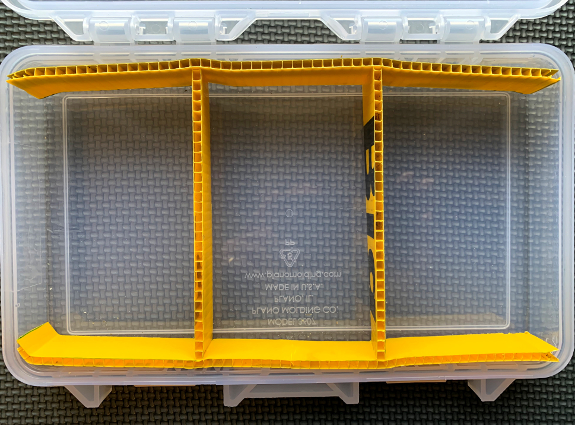
And lastly, connect the dividers inside the utility box. Trim and make adjustments via utility knife, as needed.

Fish360 DIY Hybrid Frog Tackle Box

This inexpensive DIY storage solution effectively quarantines my hybrid frogs so that they do not mate, infect their colors onto their neighbors, or damage their delicate feet.

Facebooktwitterlinkedin

DIY Hybrid Frog Tackle Box

I fish frogs from May to October. I have four frog rods on my kayak at all times. I am Frog Freak! I recently discovered hybrid frogs, which combine physical and functional characteristics from hollow body and solid body frogs. Hybrid frogs tends to have large foot prints, which make storing them a challenge. After searching the market for a storage solution, I decided to make my own Hybrid Frog Tackle Box.

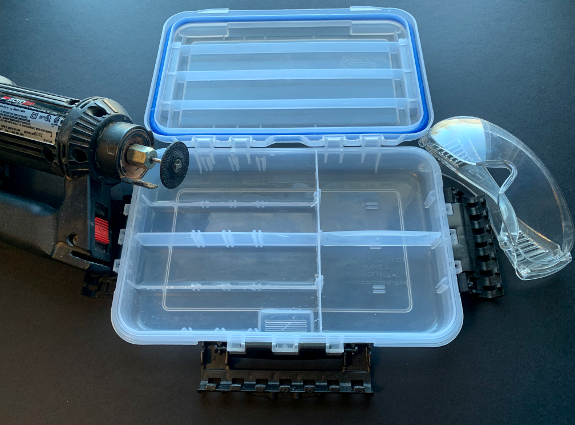
I re-purposed one of my old Plano[https://www.planomolding.com/] tackle boxes (Model 3640-1). I used a RotoZip [https://www.rotozip.com] with disk grinder to remove two dividers, which gave me two double-width channels. I always wear safety glasses. For this project, they were indispensable! The plastic shreds went everywhere!! Everywhere!!!

This storage solutions works well. However, I feel strange buying new tackle boxes to modify them via high speed rotary tools. Hopefully, manufactures produce a tackle box that will allow horizontal and vertical divider adjustments.

Facebooktwitterlinkedin

DIY Ice Fishing Sled Rod Rack

I have a plastic ice fishing sled. I like plastic ice fishing sleds because they are light, low cost, low maintenance, and highly versatile. They can transport a lot of gear over snow, slush, and ice with ease. I have expanded my ice fishing methods to include jigging. Hence, I have customized my plastic ice fishing sled with a multi-functional rod rack.

Fish360 DIY Ice Fishing Sled Rod Rack

My ice fishing sled rod rack exploits a simple design and uses 1.25″ PVC pipe and 4 stainless steel eye bolts with stainless steel flat washers, lock-tight washers, and nuts. This is a low cost and multi-functional design that can be adapted to just about any plastic ice fishing sled on the market.

The first feature is the rod holders. Based on the width of my sled, I was able to fit 4 rod holders such that the reels do not bump into each other as I am dragging my up, down, and all around the ice. When building this part of the rack, be sure to use a flat surface and a rubber camping mallet to drive the PVC segments and fittings into each other.

Fish360 DIY Ice Fishing Sled Rod Rack

The second feature is the built-in ice skimmer holder. Using the backbone of the rod rack to store an ice skimmer allows for easy access while keeping it out of the way! You can put use one of the rod holders; however, when transporting your sled, the ice skimmer can rotate and collide with your ice rods.

Fish360 DIY Ice Fishing Sled Rod Rack

The third feature is the eye bolts. The primary purpose of the 4 eye bolts is to secure the rod rack to the sled. The secondary purpose of the 4 eye bolts is to function as anchors for elastic tie downs. Elastic tie downs in an x-pattern helps to keep gear in place when traveling.

DIY Ice Fishing Sled Rod Rack

This simple and inexpensive ice fishing sled rod rack passed all of my field tests. In fact, this rack has transformed my sled from a “bucket” into an “Ice Utility Vehicle”. 😉

Facebooktwitterlinkedin

DIY Wacky O-Ring

When I fish my Senkos Wacky, I use an O-ring because it increases the longevity of the bait. Commercial O-rings work well for the 3″, 4″, 5″, and 6″ Senko. Ironically, I lose many 7″ Senkos. I think it’s because when fish tugs at one end, it’s mass contributes to it’s inertia. After retrieving several O-rings without Senkos, I started making my own Wacky O-Rings for 7″ Senkos.

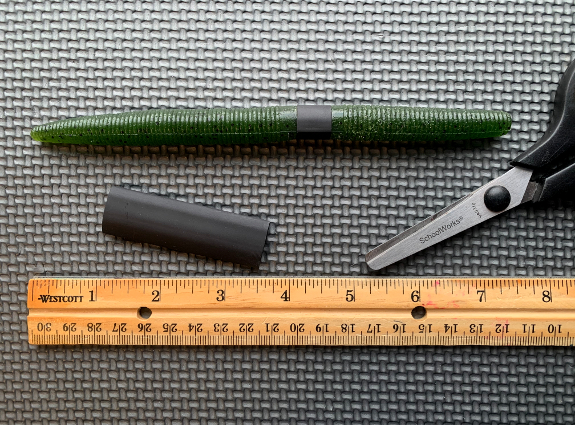
Making your own Wacky O-Rings is easy with some some simple tools. First, cut a 1/2″ wide section from 1/2″ round heat shrink tubing via scissors.

Fish360 DIY Wacky O-Ring

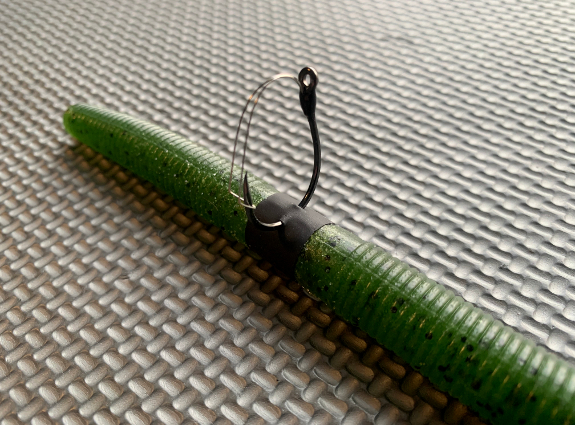
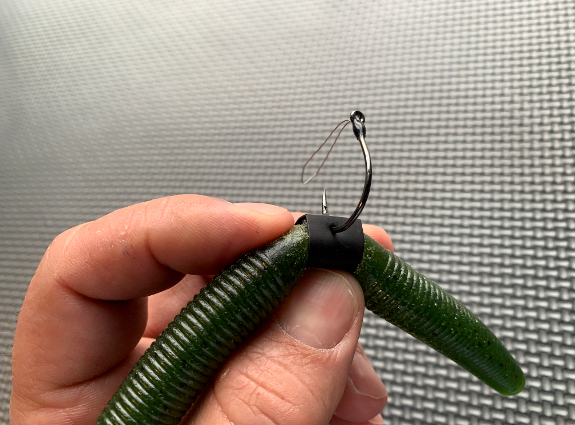
Second, insert the Senko through the 1/2″ heat shrink section. Pinch the Senko such that a gap is formed between the Senko and the heat shrink tubing. Insert your hook through the heat shrink tubing without penetrating the Senkos.

Fish360 DIY Wacky O-Ring

Lastly, hold the hook with a pair of pliers and apply just enough heat via heat gun to shrink the tubing around the hook. Gently lay the Senko down and allow the tubing to cool. If you move the hook while the tubing is hot, the holes around the hook will enlarge.

Fish360 DIY Wacky O-Ring

This DIY Wacky O-Ring works well for any size Senko and other soft plastic stick baits. You just need to adjust the diameter of the heat shrink tubing accordingly. You can use grey electrical heat shrink tubing or clear marine heat shrink tubing.

Facebooktwitterlinkedin

Rebel Buzz’n Frog DIY Modification

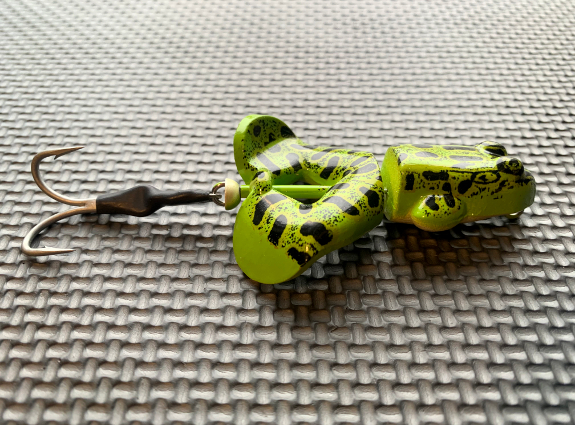
I purchased the Rebel Buzz’n Frog because of it’s action.  The frog is 2.5″ long and weighs 0.5 oz.  The stock hook is made from thin wire, which can be easily straightened by a trophy fish.  The stock hook can also be threaded on and off, which can lead to a lost fish.  Hence, I modified the frog!

Fish360 Rebel Buzz'n Frog Modification

First, I removed the stock hook.  I then removed one of the hook arms from a 2/0 VMC treble hook via mini bolt cutters; the one that was welded on to the shafts of the other two.

Fish360 Rebel Buzz'n Frog Modification

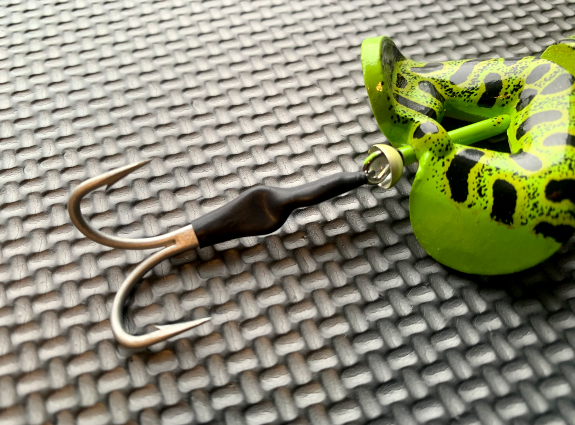
Second, I slipped the modified VMC hook on to a 50 lb Tactical Anglers clip.  I then inserted the Tactical Anglers clip into a piece of heat shrink tubing until bottom of the butting touched the bends of the hooks.

Fish360 Rebel Buzz'n Frog Modification

Third, I secured the other end of the Tactical Anglers clip to rear end loop of the frog and moved the heat shrink tubing up until the Tactical Anglers clip was fully covered .  And lastly, I applied heat.

Fish360 Rebel Buzz'n Frog Modification

I have confidence in this modification because it provides a strong hook without impacting the frogs action.  I fish this frog in clear water to get the maximum action.Facebooktwitterlinkedin

DIY Double Shot Inline Sinker

I like to surfcast for freshwater species.  When I am casting live bait or chunks into ponds, lakes, reservoirs, and rivers, I comply with the local lead laws by using steel or tungsten sinkers.  The size weights that I need to hold bottom are not always commercially available.  Hence, I make my own double shot in-line sinkers.

DIY Double Shot Inline Sinker

Making your own double shot in-line sinker is easy!  First, insert two inline sinkers (tungsten or steel) into a heat shrink tub such that their flat bottoms touch.  Second, shrink the tubing via heat gun.  And lastly, trim the excess tubing at each end via utility knife, as required.

When rigging, if you are using braid, then use a line threader to pull the line though.  This will save you time and frustration.Facebooktwitterlinkedin

DIY Scent Bottle Carabiner Loop

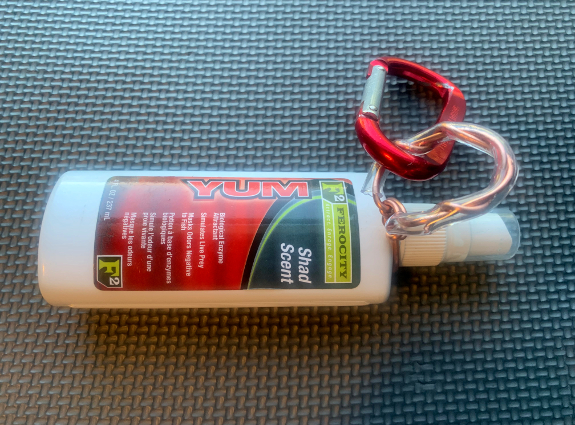
I like to spray my soft plastics with scent.  When fishing from shore and kayak, I have had a few occasions when I nearly lost my scent bottle.  I have been seen jumping into a river (without waders) to grab my scent bottle before it reached the river bottom.  I have hence made a loop to secure my scent bottle to by fishing belt or kayak via lanyard.

DIY Scent Bottle Carabiner Loop

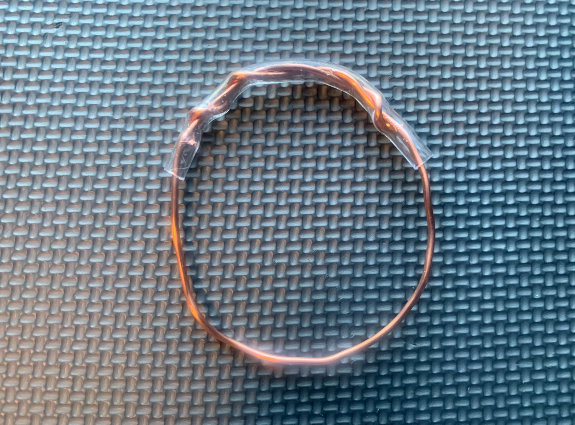
First, insert a 4″ length of vinyl tubing (1/4″ diameter) into a 14″ length of 14 gauge copper wire until it reaches the midpoint of the wire.  Bend the wire to from a large loop where the ends overlap the loop wire by 4″.

DIY Scent Bottle Carabiner Loop

Second, wrap each end of the wire over the main loop. Use a pair of pliers to make the wraps tight.

DIY Scent Bottle Carabiner Loop

Third, Move the vinyl tubing over the wire wraps.  Use a pair of pliers, if necessary.  By design, this a tight fit.

DIY Scent Bottle Carabiner Loop

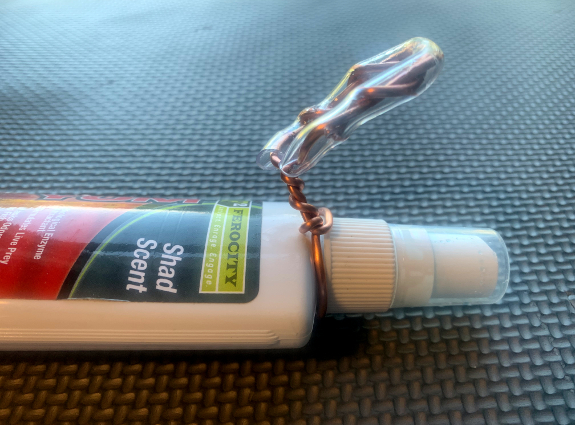
Lastly, wrap the bare wire end of the loop around the neck of the scent bottle.  The result is two loops.   Twist the larger loop until the small loop tightens around the neck of the scent bottle.  Do not over-tighten so as not the break the wire.

DIY Scent Bottle Carabiner Loop

Scent bottles are expensive.  Copper wire and vinyl tubing are inexpensive.  Secure your scent bottle with this inexpensive solution. 😉Facebooktwitterlinkedin