
The Gary Yamamoto Senko is a vertical presentation that seduces big and small fish into striking. These salt-infused soft plastics are made in Arizona and come in a variety of colors (120) and sizes (3″, 4″, 5″, 6″, and 7″). I select colors based on water clarity and local bait fish. Size selection is complex.
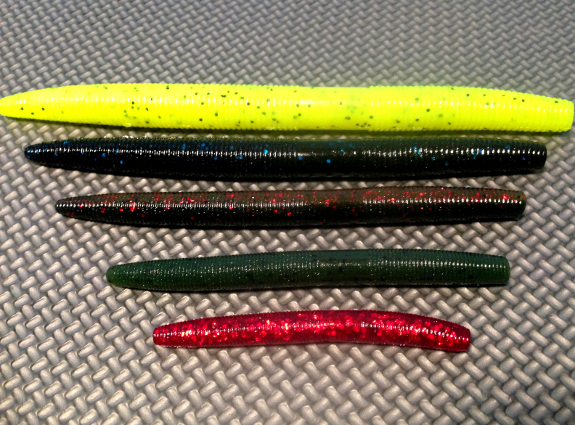
Traditional theory states: big bait = big fish. Based on my recent trips in my fishing journal, there is no direct correlation between Senko size and fish size. I have caught small fish on large Senkos. I have caught big fish on small Senkos. In fact, on a recent trip, a big fish hit my 4″ Senko like a freight train and brook my x-mart rod during the fight. I landed the rod tip and the fish. Therefore, I do not select the size of my Senko based on fish size.
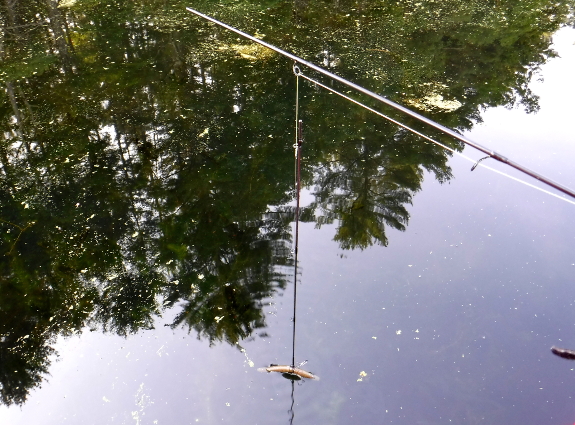
Water depth is the first thing that I take into account when selecting the size of my Senko. Sink rate increases with increasing Senko length. A 7″ Senko will sink faster than a 3″ Senko through the same water column. In shallow water, a 7″ Senko will sink too fast. In deep water, a 3″ Senko will sink too slow. Therefore, as water depth increases, I use increasingly larger Senkos to achieve an optimal sink rate through the water column.

Vegetation is the second thing that I take into account when selecting the size of my Senko. A 3″ Senko will take a long time to reach bottom in weedy water (if at all). A 7″ Senko will reach bottom in weedy water (just at a slower rate than in clear water). Therefore, in weedy water I use larger Senkos because their increased mass helps them flutter their way to bottom.

The Gary Yamamoto Senko is available in 720 different size and color combinations. Therefore, I can match any local bait fish in any water column, with and without weeds. I will continue to fish Senkos, big and small, with a new St. Croix rod. Fish beware! 😉