DIY Wacky O-Ring

When I fish my Senkos Wacky, I use an O-ring because it increases the longevity of the bait. Commercial O-rings work well for the 3″, 4″, 5″, and 6″ Senko. Ironically, I lose many 7″ Senkos. I think it’s because when fish tugs at one end, it’s mass contributes to it’s inertia. After retrieving several O-rings without Senkos, I started making my own Wacky O-Rings for 7″ Senkos.
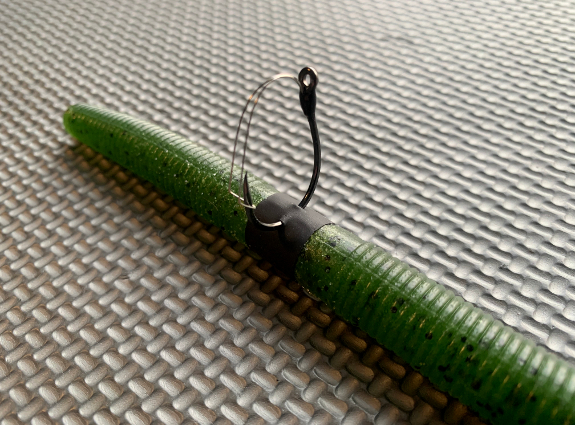
Making your own Wacky O-Rings is easy with some some simple tools. First, cut a 1/2″ wide section from 1/2″ round heat shrink tubing via scissors.
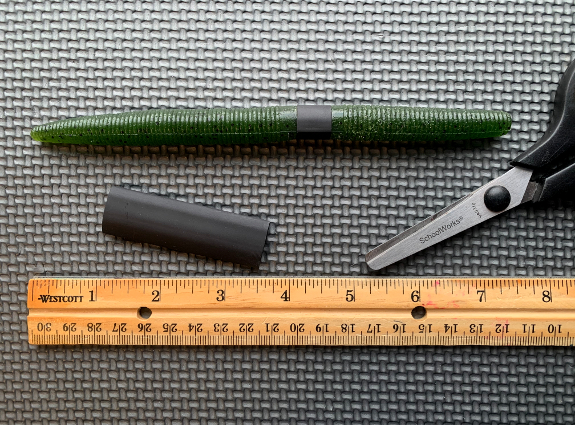
Fish360 DIY Wacky O-Ring

Second, insert the Senko through the 1/2″ heat shrink section. Pinch the Senko such that a gap is formed between the Senko and the heat shrink tubing. Insert your hook through the heat shrink tubing without penetrating the Senkos.
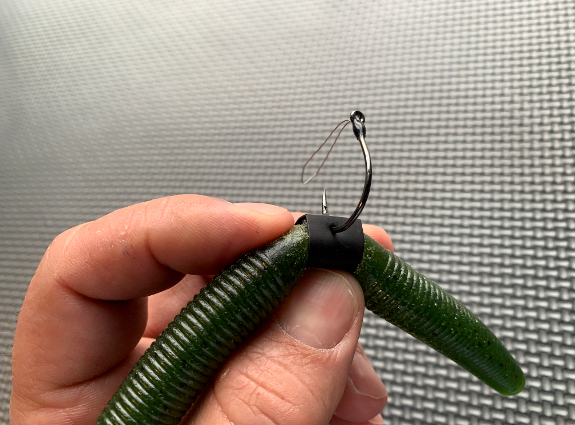
Fish360 DIY Wacky O-Ring

Lastly, hold the hook with a pair of pliers and apply just enough heat via heat gun to shrink the tubing around the hook. Gently lay the Senko down and allow the tubing to cool. If you move the hook while the tubing is hot, the holes around the hook will enlarge.

Fish360 DIY Wacky O-Ring

This DIY Wacky O-Ring works well for any size Senko and other soft plastic stick baits. You just need to adjust the diameter of the heat shrink tubing accordingly. You can use grey electrical heat shrink tubing or clear marine heat shrink tubing.


Facebooktwitterlinkedin

Kahtoola Micro Spikes

I have a pair of Muck Arctic Pro Boots.  My feet are always dry and warm when I am ice fishing.  LOVE THEM!  The only limitation is low traction.  Hence, I purchased a pair of Kahtoola Micro Spikes.

Fish360 Kahtoola Micro Spikes

The Kahtoola Micro Spikes have 3/8″ spikes made from high quality stainless steel.  These spike grip under load without bending.  They will keep you vertical at all times.

The elastomer harness allows you to quickly put the spikes on.  Once they are on, they stay on.  Other brands then to fall off without warning.  You only notice when you need them most.

The elastomer harness also allows you to quickly remove the spikes.  This is key for me because I drive to my spots fully geared up; driving with spikes is a skill that I do not need to master.

The Kahtoola Micro Spikes grip so well I am ice fishing, that I also use them when I am plowing and shoveling snow.  High Quality + Multiple Uses = High Value.Facebooktwitterlinkedin

Al Gag’s Fishing Lures

Today I had the opportunity to press pause and visit Al Gag’s Fishing Lures in Indian Orchard, Massachusetts.   Al Gag’s shop is centrally located in the middle of an unsuspecting mill building that is surrounded by a canal and a river.

Fish360 Al Gags Fishing Lures

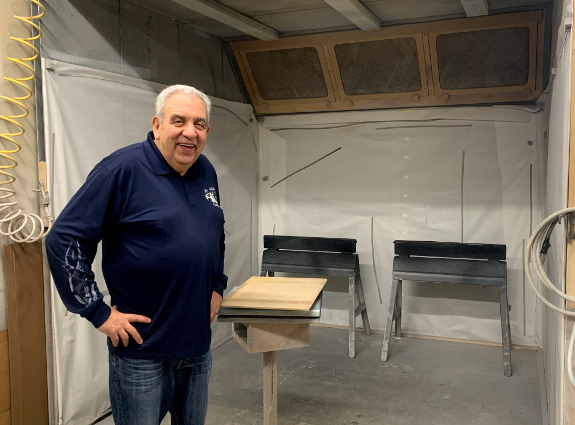
I parked my Suburban in the spacious parking lot.  I braved the polar temperature (20 degrees Fahrenheit) to reach door 19.  I then boarded an old school freight elevator with a capacity of 6,000 pounds to reach the third floor.  The Al Gag’s command center is a fully optimized 900 square feet area in the epicenter of a creative community of artists and craftsman who network and inspire each together to build amazing products and services.

Fish360 Al Gags Fishing Lures

Al started our conversation by showing me pictures of trophy fish hooked via Whip-It Eel and Whip-It Fish from Maine to Florida.  The pictures were a foreshadow to the new products that will soon be available and that is currently being refined based on field testing and feedback.

Fish360 Al Gags Fishing Lures

The new product that hooked my attention immediately was the new jigs.  Al Gag’s signature jig geometry will now be followed by Owner hooks with bleeding sharp points and super strong wires.  These hooks can hold trophy striped bass, tarpon, tuna, and everything in between.  You will not find these hooks on the Owner website or catalog.  These hooks are custom made to Al’s exact specifications.  Since the hooks are custom, the supply of these news jigs is limited.

Fish360 Al Gags Fishing Lures

These new jigs with the custom Owner hooks are currently only available at fishing shows.  You do not want to be without these new jigs.  Stop by Al’s booth at one of these shows and stock up! 😉

Fish360 Al Gags Fishing Lures

In addition to the beastly jigs, you will soon be able to dress your Whip-It Eels and Whip-It Fish with skirts.  This subtle modification will give your presentation a seducing action that fish cannot resit!  What about ultra-violet? Great question! 😉  What about new colors?  Yes!  Think “Chicken Scratch” and “Wonder bread”. OMG…fish beware!!!!  Bottom line, from trout to tuna, Al Gag’s has a jig and plastic for you.

Fish360 Al Gags Fishing Lures

Before you sit down with Al Gagliarducci to talk fish, clear your schedule.  After producing several successful lures that pushed the boundaries of lure action, sound, and color over the past 40 years, he has many stories to tell.  Funny stories.  Fishy stories.  And stories that I cannot repeat here! 😉  I am glad that I cleared my schedule for Friday the thirteenth of December, 2019.Facebooktwitterlinkedin

Gray FishTag Research Northeast Striped Bass Study

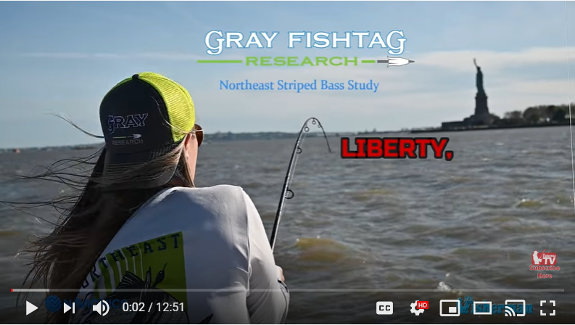
Gray FishTag Research (with the help of The Fisherman Magazine, Navionics, Rocket Charters, and Fin Chaser Charters) started a satellite tag study on striped bass in the Northeast.  On May 21, 2019, two striped bass were tagged with Wildlife Computer MiniPAT tags in New York’s Hudson River: “Liberty” and “Freedom”.

Gray FishTag Research Northeast Striped Bass Study

Unlike an analog “spaghetti tag”, the Wildlife Computer MiniPAT tag captures real time data:

  • Tracking Data: light-based geolocation
  • Diving Behavior: time-at-depth histograms
  • Temperature Profiles: profile of depth and temperature

Based on the data collected, scientists want to learn about the temperature profiles, depth profiles, and long term movements of striped bass.

On August 22, 2019, Freedom‘s tag washed up on Sagamore Beach in Massachusetts.  The analysis of the data is starting to paint an interesting picture.  However, data from additional fish is required to make scientific conclusions.

On October 22, 2019, Liberty‘s tag washed up along the beach at Loch Arbour in New Jersey.  The data is still being processed.  The results will be published next month.

This amazing study is only possible with collaborations, sponsors, and donations.  Each Wildlife Computer MiniPAT tag costs $5,000.00.  To help keep this study running, you can provide support via GoFundme or by shopping via Amazone Smile.Facebooktwitterlinkedin

Rebel Buzz’n Frog DIY Modification

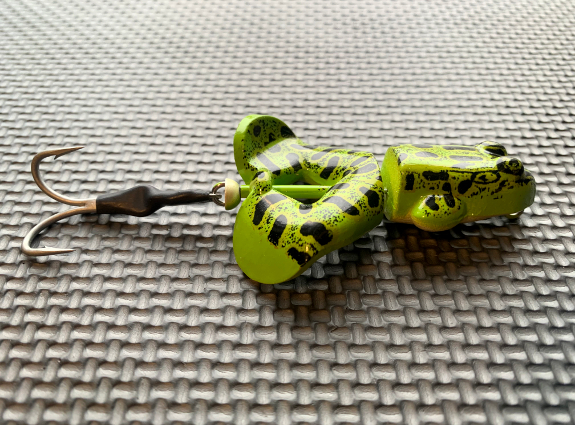
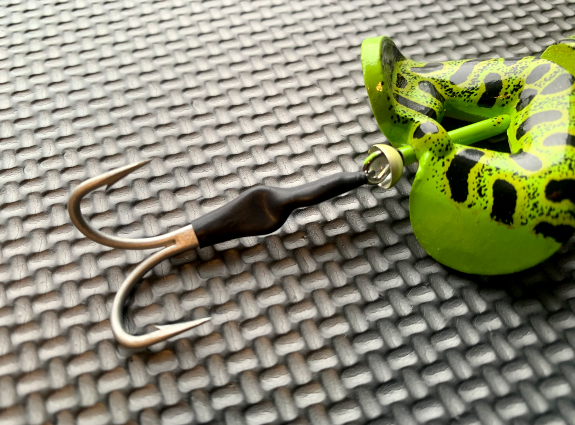
I purchased the Rebel Buzz’n Frog because of it’s action.  The frog is 2.5″ long and weighs 0.5 oz.  The stock hook is made from thin wire, which can be easily straightened by a trophy fish.  The stock hook can also be threaded on and off, which can lead to a lost fish.  Hence, I modified the frog!

Fish360 Rebel Buzz'n Frog Modification

First, I removed the stock hook.  I then removed one of the hook arms from a 2/0 VMC treble hook via mini bolt cutters; the one that was welded on to the shafts of the other two.

Fish360 Rebel Buzz'n Frog Modification

Second, I slipped the modified VMC hook on to a 50 lb Tactical Anglers clip.  I then inserted the Tactical Anglers clip into a piece of heat shrink tubing until bottom of the butting touched the bends of the hooks.

Fish360 Rebel Buzz'n Frog Modification

Third, I secured the other end of the Tactical Anglers clip to rear end loop of the frog and moved the heat shrink tubing up until the Tactical Anglers clip was fully covered .  And lastly, I applied heat.

Fish360 Rebel Buzz'n Frog Modification

I have confidence in this modification because it provides a strong hook without impacting the frogs action.  I fish this frog in clear water to get the maximum action.Facebooktwitterlinkedin

Cuttyhunk and The Elizabeth Islands

During my annual surf fishing trip to Cuttyhunk this past June, I picked up a copy of “Cuttyhunk and The Elizabeth Islands”. I now have a deeper understanding of the role that these small islands off the coast of Massachusetts played in the formative years of the American Experiment.

Fish360 Cuttyhunk and The Elizabeth Islands

This book provides a historical overview of the Elizabeth Islands (Cuttyhunk, Penisese, Nashawena, and Paque); from when they were founded to modern day. The first commercial interest in these islands was timber. After the timber was harvested, farming took root. Recreational fishing soon followed. The Cuttyhunk Fishing Club and the Pasque Island Fishing Club were established. The members of these clubs fished lobster tails from DIY stands perched on the slippery boulders studding the shorelines of these islands. Landing a 60 lb striped bass in the surf through a boulder field with a graphite rod, braided line, forged hooks, and a water proof reel with 40 lbs of drag is a challenge for a skilled surfcaster. I cannot image how a CFC member landed a 64 lb striped bass with gear from 1882!

According to this book, Charlie Cinto landed his 73 lb striped bass from his boat off the coast of Nashawena Island. However, an old salt on Cuttyhunk, who recalls the catch, told me a different story. One thing is certain, recreational fishing on the Elizabeth Islands was and is legendary. I hope with prudence, fishing on the Elizabeth Islands shall remain legendary for my grandchildren’s children and their grandchildren’s children.

Fish360 Cuttyhunk and The Elizabeth Islands

Before the United States Coast Guard, volunteers from Cuttyhunk and Nashawena rescued people, live stock, and goods from ships resting on the rocks and reefs around the islands.

  • Aquatic, 1843
  • Mary Givan, 1872
  • Anna Mitchell, 1875
  • William H. Thorndike, 1879
  • Rob and Harry, 1892
  • Joseph Oakes, 1896
  • Stephen G. Hart, 1911
  • Wanderer, 1924

The volunteers were family men. These family men were selfless and always willing to help others at the risk of their own lives! Why? Because that was the right thing to do. Reading these acts of bravery makes me proud to be an American.

I enjoyed reading about the families who lived on the Elizabeth Islands. Family is the basic unit of humanity. I also enjoyed reading about the birth of America’s recreation fishing industry. Work hard. Play harder.Facebooktwitterlinkedin

Casting into the Light: Tales of a Fishing Life

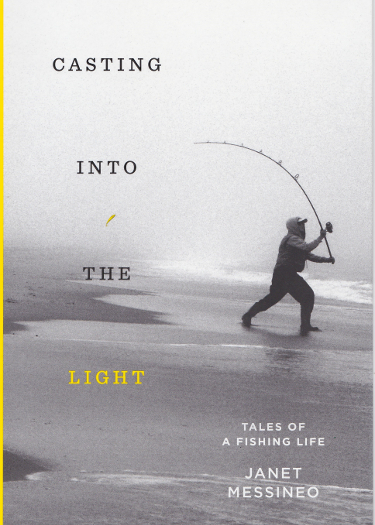
Janet Messineo is an icon in the surfcasting community. When I learned that she published her first book, I ordered it that day! “Casting into the Light” capture’s Janet’s story from her humble begging in Lawrence to present day in Martha’s Vineyard.

Fish360 Casting Into The Light
Janet’s life has been full of challenges: alcohol, drugs, infertility, and Hepatitis C. These challenges are real. Many people have them. How she overcame this challenges is extraordinary. I have always had respect for Janet as a surfcaster. I now have an equal respect for Janet as a person.

In her stories, Janet mentions at least 20+ spots. However, what her stories reveal is that knowing where to fish does not guarantee fish. Knowing when to fish a spot is more important. Having the right gear and skills are also critical to success. Hint: look for the spots that are mentioned several times across the chapters. 😉

In 1980 Janet landed a 45 pound striped bass. In 1984 she landed another 45 pound striped bass! Her life time goal is not to land a 50 pound striped bass. For her, that would be pedestrian. Her goal is to be the first woman to win the Martha’s Vineyards Derby Shore Grand Slam. She is a determined, systematic, and innovative. I hope she realizes her goal. I know that if she hooks a 50 pound striped bass, she will land it. She’s a professional surfcaster who leaves nothing to chance.

Before Janet became a professional taxidermist, she worked at several restaurants: Black Dog, Helios, and Home Port. These experiences expanded her pallet and culinary expertise. She shares several of her recipes for bluefish, striped bass, and several other specifies: squid, scallops, herring, sea robin, white perch, sea bass, and halibut. Her sea robin recipe turns “trash fish” into a tasty dish.

Janet attributes her success to her mentors. She writes articles. She delivers seminars. She conducts workshops. I hope others in our community follow her exemplary leadership.

Helping a novice angler is more effective than intimidating them out of your way.

Janet is also a great story teller. Her simple, direct, and honest writing style will hook you in the first chapter. She will reel you in until the last chapter. “Casting into the Wind” will become a classic in striped bass literature. Order your copy today!Facebooktwitterlinkedin

DIY Double Shot Inline Sinker

I like to surfcast for freshwater species.  When I am casting live bait or chunks into ponds, lakes, reservoirs, and rivers, I comply with the local lead laws by using steel or tungsten sinkers.  The size weights that I need to hold bottom are not always commercially available.  Hence, I make my own double shot in-line sinkers.

DIY Double Shot Inline Sinker

Making your own double shot in-line sinker is easy!  First, insert two inline sinkers (tungsten or steel) into a heat shrink tub such that their flat bottoms touch.  Second, shrink the tubing via heat gun.  And lastly, trim the excess tubing at each end via utility knife, as required.

When rigging, if you are using braid, then use a line threader to pull the line though.  This will save you time and frustration.Facebooktwitterlinkedin

Safe Surfcasting: Compass

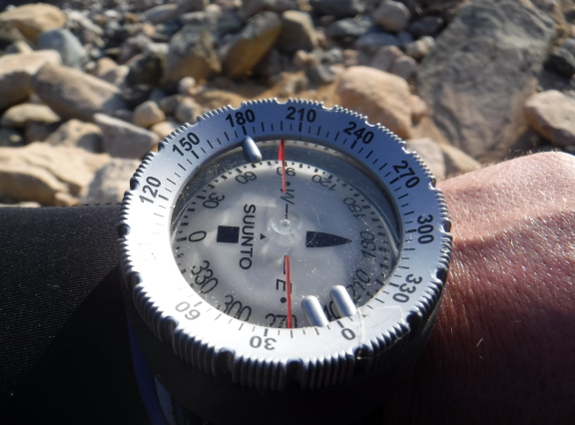
I like to surfcast remote spots.  These spots do not have paved roads or houses.  These spots look different under the cover of night.  I use my experience and a compass to orient my self.

Safe Surfcasting Compass

One night, my crew and I were fishing Cuttyhunk’s southwest point.  The wind and waves made the area nearly un-fishable.  After a hour of continuous casting without a bump, we decided to explore.  We waded across the Oyster Pond inlet.  The water was waist deep and moving fast. A misstep and we would have been skishing for oysters.

We fished the area for a couple of hours.  We caught schoolies and keepers.  When the bite died, we started to plan our next move.  Crossing the Oyster Pond Inlet was not an option, given the stage of the tide.  Walking around the East side of the island would have taken hours.  While one of my friends was draining water out of his head lamp, I noticed an unmarked trail. We jumped on the unmarked trail without knowing where it would lead us.  We came to a fork on the trail.  I used my wrist dive compass to decide which path to take.  The path lead us to another fork.  Again, I used my wrist dive compass.  We made our way back to Pete’s Place Rentals in record time.

I wear a Suunto SK8 dive compass on my wrist when I fish remote spots because it’s water proof and easy to read at night.  This compass keeps me safe and saves me time.  Never fish without a compass.

 Facebooktwitterlinkedin

Tiderunner Ultimate Surf Belt

I have several surfcasting belts.  I purchased each belt because it improved on the previous one.  I recently ordered the Tiderunner Ultimate Surf Belt because of it’s design, usability, and versatility.

Fish360 Tiderunner Ultimate Surf Belt

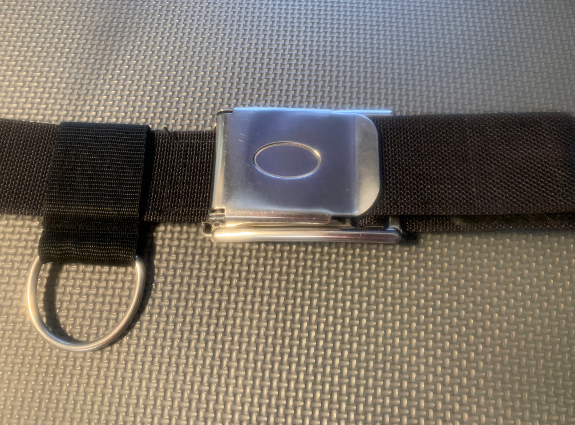
The Tiderunner Ultimate Surf Belt was designed (U.S. Patent Pending) by Steve Knapik.  This belt is made from heavy duty nylon dive belt webbing.  The feature that differentiates the Tiderunner Ultimate Surf Belt from other belts on the market is it’s multi-stage locking system.  The first stage is the 304 stainless steel compression dive buckle.  The second stage is a two inch wide industrial strength Velcro strip with a water resistant adhesive.  Hence, if the 304 stainless steel compression dive buckle was to open, the belt will hold and not fall via gravity.

The Tiderunner Ultimate Surf Belt allows me to quickly and easily adjust the belt based on my circumference, which varies based on what I am wearing: wetsuit, waders, T-shirt, or wool sweeter.  In addition, locking and unlocking the buckle can be done with one hand.  Other surf belts on the market have a plastic buckle that requires synchronized multi-step actions to un-lock.  Time is fish!

The 2″ width can accommodate standard accessories like D-rings.  This allows me to easily configure my Tiderunner Ultimate Surf Belt for chunking, plugging, or fly fishing.  The stiffness of the belt is particularly helpful when you have a stripping basket! Standard fly fishing belts lack “backbone”.

No surfcasting belt is perfect.  Structurally and functionally speaking, the Tiderunner Ultimate Surf Belt is close.  In addition its design, usability, and versatility, I like the fact that it is made in the USA by a surfcaster for surfcasters at a price that will not break the bank.

Facebooktwitterlinkedin