Sportfish Angler Data Collection Team (SADCT)

I learned about the Sportfish Angler Data Collection Team (SADCT) from Kim Trull during a Plum Island Surfcasters club meeting. Kim works at the Massachusetts Division of Marine Fisheries with other scientists who study the age of marine species by analyzing patterns in their scales. The data collected from this program is used by the Atlantic States Marine Fisheries Commission to protect our marine species.

Fish360 SADCT Scale Program

Collecting scale samples while sitting on a kayak or standing on a rock from a fish that you are going to release is not easy. For example, paper records will not work! I have developed a simple scale sample collection method.

  1. I measure the length of the fish using a folding plastic yard stick ruler.
  2. I remove a eight scales from the appropriate area of the fish (which is species specific) via tweezers (which is on a lanyard) and put them in a snack sized Zip Lock bag.
  3. I write the species and length on the Zip Lock bag via Sharpie.
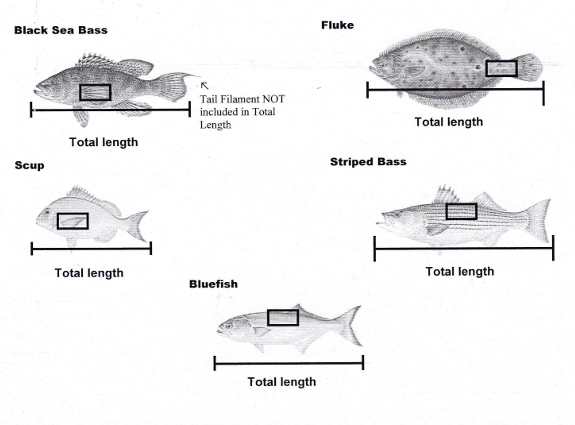
Fish360 SADCT Scale Program

When I get home, I put the scales into the provided scale sample envelopes and fill in the remaining information for each sample. I mail my samples via USPS to:

Division of Marine Fisheries – Gloucester Office
Attn: Kim Trull
30 Emerson Avenue, Gloucester, MA 01930

This will be my third years participating in this program. If you fish for striped bass, bluefish, black sea bass, fluke, or scup, then join us so we can help our dedicated scientists better understand our marine species and help our policy makers reach marine management decisions based on data that will benefit species and anglers.


Facebooktwitterlinkedin

Senko: sink or swim?

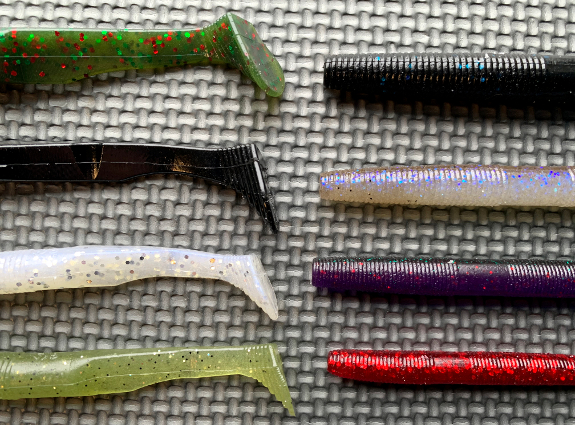
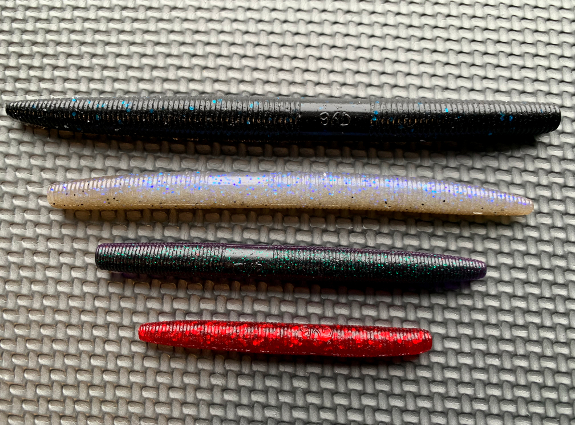
Senkos allow you to fish the entire water column from top to bottom and from left to right. Senkos allow you to fish shallow water, deep water, and everything in between. Senkos allow you to fish clear, dirty, or weedy water. Hence, Senkos are the most versatile bait on the market. But! What is better: sinking Senkos or swimming Senkos?

Fish360 Senko

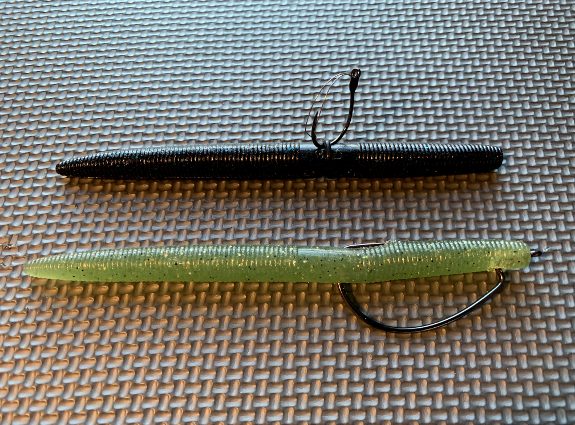
Sinking Senkos came first. Hence, they are more widely exploited for targeting fish. Sinking a Senko through the water column (wacky or Texas) is an efficient way to target specific structures. I rig my Senkos wacky via VMC Weedless Wacky hooks. I rig my Senkos Texas via KVD EWG hooks. I match the hook size to the size of the sinking Senko (3″, 4″, 5″, 6″, or 7″).

Fish360 Senko

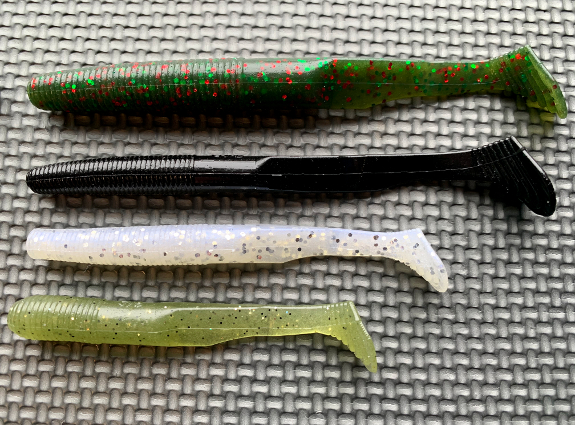
Sinking Senkos are relatively new. They are effectively a swim bait with a worm profile; this makes them a stealthy presentation with a seductive action that compels nearby fish into striking. Swimming a Senko across the water column (weighted or naked) is an efficient way to cover a lot of water. I rig my swim Senkos with Owner Beast Hooks. I match the size of the hook to the size of the swim Senko (3.5″, 4″, 5″, or 5.5″).

Fish360 Senko

On each trip, I bring a Plano box full of pre-rigged sinking Senkos in a variety of colors from 3″ to 7″. I also bring a Plano box with pre-rigged swimming Senkos from 3.5″ to 5.5″ in a variety of colors. I select a sinking or a swim Senko based on the water and structure that I am fishing. I fan cast the Senko in 360 degrees around my kayak or at every edge holding water around the structure. If there are fish, I’ll catch them!

Facebooktwitterlinkedin

Peter Johnson, Surfcasting Legend

I learned from social media that my friend Peter Johnson passed away. Peter was a worldly man. He graduated from Dartmouth College in New Hampshire. He served in the United States Military as a Navy Fighter Pilot. He planted himself on Martha’s Vineyard, where he grew deep roots. I first met Peter when I visited his Robert’s Rangers booth at the 2012 New England Saltwater Fishing Sow. The last time that I saw Peter was at last year’s MSBA Fishing Show. Our shared time was too short.

Fish360 Peter Johnson Robert's Rangers

Many business professionals are driven by profit. Peter was driven by providing a quality fishing lure that caught fish at an affordable price. He sold and shipped Robert’s Rangers to anglers all over the world. Each time I saw Peter, he had a new fishing story and a picture of a new species that was landed on a Robert’s Ranger. I am delighted that his family and friends will continue his legacy by running the company that he transformed through relationships and grit. My surf bag always has a Robert’s Rangers.

In the middle of a bluefish blitz he [Lance Dimock] caught a stripper on a Roberts Ranger. He had never seen a striper before in his life. The fish weighed 50 lbs..

— Ron Domurat, Three Decades of the The Derby

Peter was gentleman, a scholar, a savvy business person, and a sharpie surfcaster with overflowing generosity. I am sad that he is gone. I am a better person because of our conversations on fishing, family, business, and politics. We violently agreed on three of these topics and peacefully disagreed on the other.

Facebooktwitterlinkedin

DIY Hybrid Frog Tackle Box II

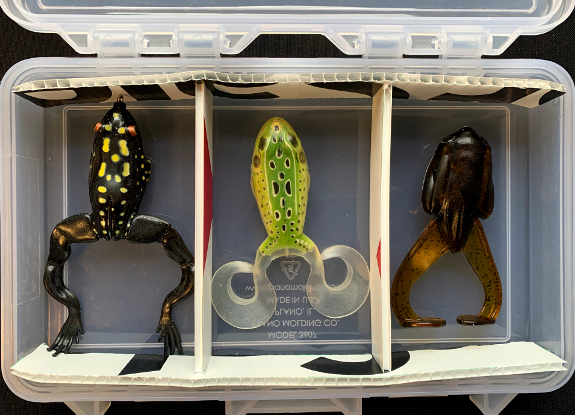
I re-purposed one of my Plano boxes that I was not using because the internal dividers did not work for me. This storage solution stores my hybrid frogs really well. But! I feel strange buying new Plano boxes so that I can modify them via high speed rotary tool. Hence, I purchased an open compartment utility box form Plano and made my own internal dividers.

Fish360 DIY Hybrid Frog Tackle Box

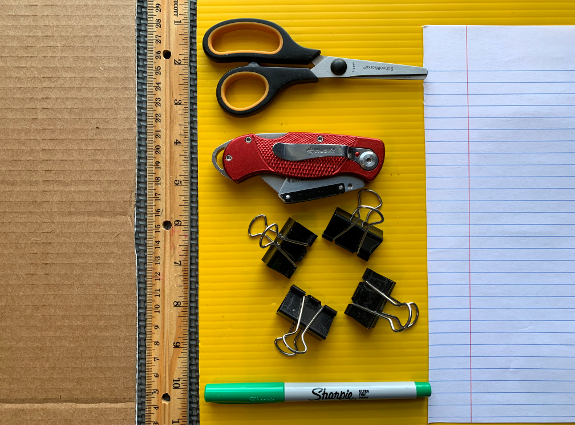
Making your own internal dividers is easy. You only need an open utility box, a sheet of paper, cardboard, and a recycled corrugated vinyl sign. In addition, you also need some simple tools: ruler, scissor, utility knife, fine tip Sharpie, and two clips.

Fish360 DIY Hybrid Frog Tackle Box

First, make two templates for the inner dimensions of your box via paper and scissors. One template for the length and height and one template for the width and height.

Fish360 DIY Hybrid Frog Tackle Box

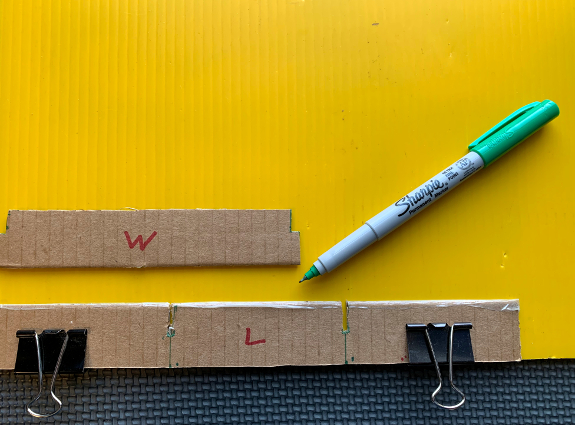
Second, place the paper templates onto cardboard and secure them via clips. Trace the outline of the templates onto the cardboard via fine tip Sharpie. Cut along the Sharpie lines via utility knife. Be sure to have a piece of scrap plywood (or a similar material) underneath the cardboard so that you do not damage the underlying surface.

Fish360 DIY Hybrid Frog Tackle Box

Third, make the interlocking slots on the “length” cardboard divider template. Divide the length of the template into three equal segments and mark it via fine tip Sharpie. At the two marked interlocking points, cut slots to half the height of the divider and to the width that will accommodate the thickness of your corrugated vinyl sign.

Forth, make the interlocking slots on the “width” cardboard divider templates. At each end of the the template, cut slots to half the height of the divider and to the width that will accommodate the thickness of your corrugated vinyl sign.

Fifth, place the cardboard templates on your vinyl sign such that the internal ribs are perpendicular to the templates. Secure the cardboard templates to the vinyl sign via clips. Trace the templates onto the sign via via fine tip Sharpie. Cut along the Sharpie lines via utility knife. For the “length” dividers, cut the two internal ribs at each end. This will help the dividers bend at each curved corner of the utility box.

Fish360 DIY Hybrid Frog Tackle Box

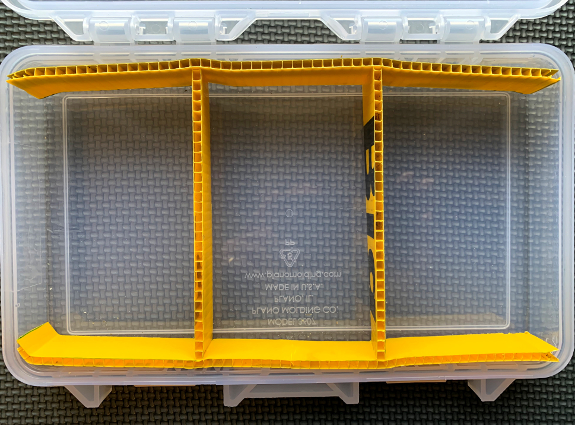
And lastly, connect the dividers inside the utility box. Trim and make adjustments via utility knife, as needed.

Fish360 DIY Hybrid Frog Tackle Box

This inexpensive DIY storage solution effectively quarantines my hybrid frogs so that they do not mate, infect their colors onto their neighbors, or damage their delicate feet.

Facebooktwitterlinkedin

Senkos: Wacky or Texas?

I learned to fish Senkos via Wacky Rig. I have had so much success with this rig, that I never thought of changing it. In fact, I did not know there was another way to rig Senkos. That is until a friend of mine told me that he only fishes Senkos via Texas Rig. He blew my mind! After some field testing, I can confidently say that both rigging options are successful in specific situations.

Fish360 Senkos: Wacky or Texas?

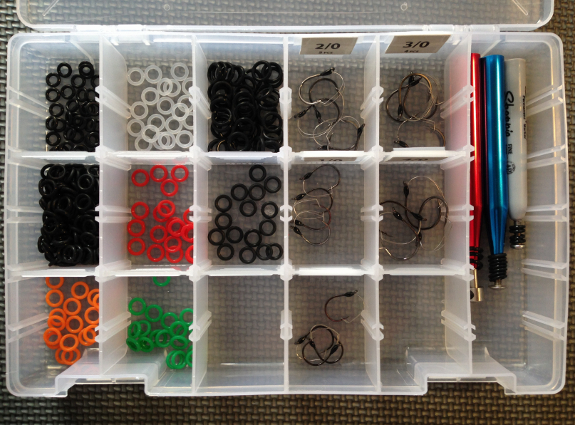
When I fish my Senkos Wacky Rig, I use O-rings. I select the hook and O-rig size based on the Senko’s size. The O-ring absorbs most of the impact during a strike and thereby reduces bait damage. I often catch multiple fish from one single Senko. When one of my Senkos eventually splits in two, I glue the two halves together via super glue. I have re-glued the same Senko multiple times, and caught fish!

Fish360 Senkos: Wacky or Texas?

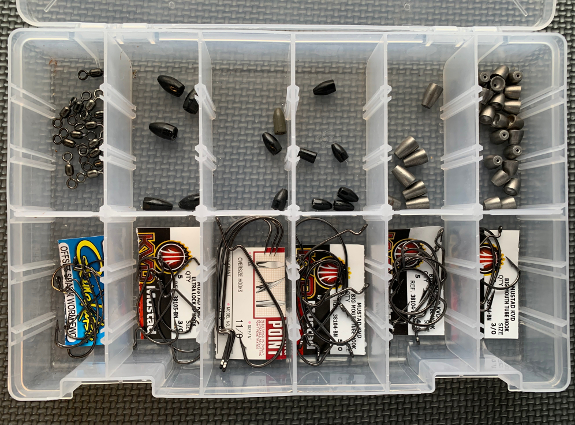
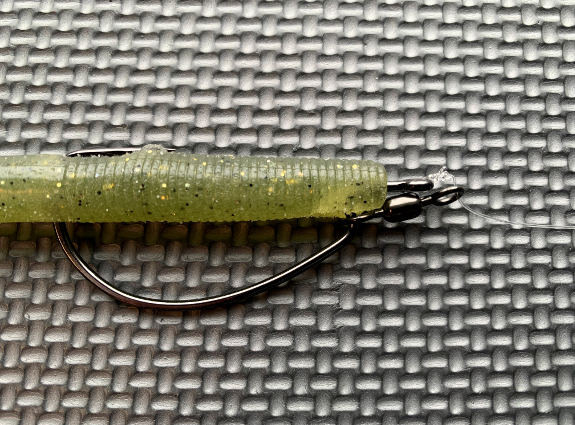
When I fish my Senkos Texas Rig, I use a swivel to keep the bait from sliding down the hook. The strength of the swivel is not critical; the top eye of the swivel just needs to reach the eye of the hook.

Fish360 Senkos: Wacky or Texas?

In clear and shallow water, I fish my Texas Rigged Senkos without weight. When I want to penetrate vegetation or deep water, I thread my line through an appropriately sized weight. I use EWG hooks in sizes proportional to the Senko sizes.

Fish360 Senkos: Wacky or Texas?

Wacky Rig Senkos exhibit lots of action as they flutter towards bottom. They can be used for multiple fish. However, they do not penetrate vegetation. In contrast, Texas Rig Senkos have less action, they damage easily and often beyond repair. However, they penetrate vegetation and deep water.

Facebooktwitterlinkedin

The Fish That Changed America

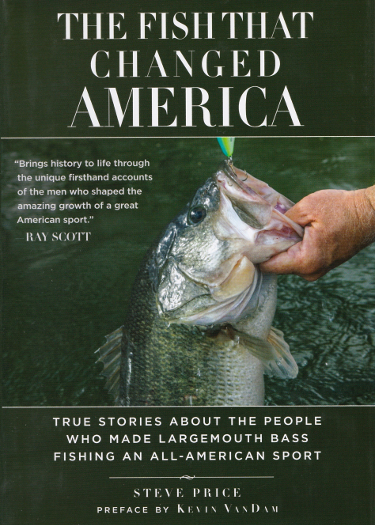
Largemouth bass are aggressive predators. The American Anglers who targeted these fish from 1888 to 2009 are equally aggressive. In his book, Steve Price captures the first hand accounts of 42+ men who made largemouth bass fishing an All-American sport.

Some of the stories provide great historical insight on the origin of modern lures. Some stories are hilarious! Some of the stories are inspiring. Each story is unique and worth the cost of the book.

Since 2009, the largemouth bass fishing sport has entered a new chapter. We have international largemouth bass anglers. We have multiple tournament trails, which include kayak bass fishing! Women are playing a larger role in the sport. I am looking forward to reading the next book (2010 to 2030).

Facebooktwitterlinkedin

DIY Hybrid Frog Tackle Box

I fish frogs from May to October. I have four frog rods on my kayak at all times. I am Frog Freak! I recently discovered hybrid frogs, which combine physical and functional characteristics from hollow body and solid body frogs. Hybrid frogs tends to have large foot prints, which make storing them a challenge. After searching the market for a storage solution, I decided to make my own Hybrid Frog Tackle Box.

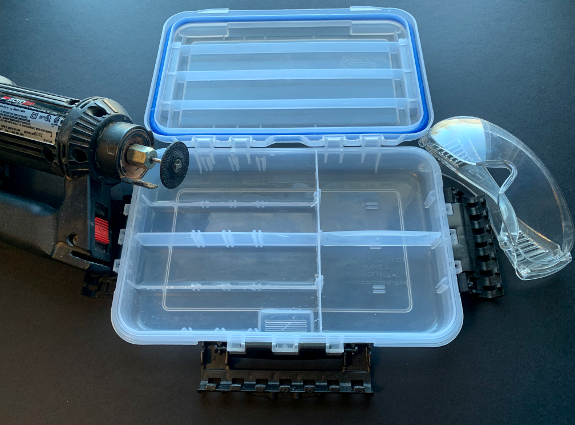
I re-purposed one of my old Plano[https://www.planomolding.com/] tackle boxes (Model 3640-1). I used a RotoZip [https://www.rotozip.com] with disk grinder to remove two dividers, which gave me two double-width channels. I always wear safety glasses. For this project, they were indispensable! The plastic shreds went everywhere!! Everywhere!!!

This storage solutions works well. However, I feel strange buying new tackle boxes to modify them via high speed rotary tools. Hopefully, manufactures produce a tackle box that will allow horizontal and vertical divider adjustments.

Facebooktwitterlinkedin

DIY Ice Fishing Sled Rod Rack

I have a plastic ice fishing sled. I like plastic ice fishing sleds because they are light, low cost, low maintenance, and highly versatile. They can transport a lot of gear over snow, slush, and ice with ease. I have expanded my ice fishing methods to include jigging. Hence, I have customized my plastic ice fishing sled with a multi-functional rod rack.

Fish360 DIY Ice Fishing Sled Rod Rack

My ice fishing sled rod rack exploits a simple design and uses 1.25″ PVC pipe and 4 stainless steel eye bolts with stainless steel flat washers, lock-tight washers, and nuts. This is a low cost and multi-functional design that can be adapted to just about any plastic ice fishing sled on the market.

The first feature is the rod holders. Based on the width of my sled, I was able to fit 4 rod holders such that the reels do not bump into each other as I am dragging my up, down, and all around the ice. When building this part of the rack, be sure to use a flat surface and a rubber camping mallet to drive the PVC segments and fittings into each other.

Fish360 DIY Ice Fishing Sled Rod Rack

The second feature is the built-in ice skimmer holder. Using the backbone of the rod rack to store an ice skimmer allows for easy access while keeping it out of the way! You can put use one of the rod holders; however, when transporting your sled, the ice skimmer can rotate and collide with your ice rods.

Fish360 DIY Ice Fishing Sled Rod Rack

The third feature is the eye bolts. The primary purpose of the 4 eye bolts is to secure the rod rack to the sled. The secondary purpose of the 4 eye bolts is to function as anchors for elastic tie downs. Elastic tie downs in an x-pattern helps to keep gear in place when traveling.

DIY Ice Fishing Sled Rod Rack

This simple and inexpensive ice fishing sled rod rack passed all of my field tests. In fact, this rack has transformed my sled from a “bucket” into an “Ice Utility Vehicle”. 😉

Facebooktwitterlinkedin

Worcester County League of Sportsman’s Clubs Inc

While trolling through the isles at the New England Fishing Expo last month, I hooked up with the Worcester County League of Sportsman’s Clubs. The WCLSC has been serving sportsmen for 145 years. As a club of clubs, the WCLSC represents 53 clubs (25,000+ sportsmen).

The WCLS website has a new Event Calendar feature that allows you to find outdoor events and classes across central Massachusetts. I used this new feature to find Ice Fishing Tournaments happening this month. WCLS also has a monthly newsletter and a Facebook page. If you looking to get out and do something in the Nature’s playground, check them out!

Facebooktwitterlinkedin

Surfcasting Block Island and Cuttyhunk

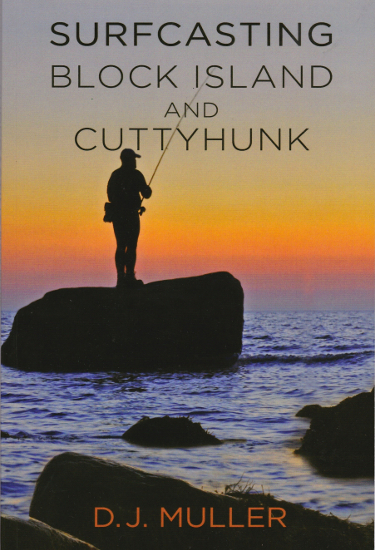
After surfcasting Block Island and Cuttyhunk extensively for many moons, DJ Muller has published: Surfcasting Block Island and Cuttyhunk. In this book, DJ transforms his first hand knowledge and experience into words. Like his previous four books, this new addition to the library of striped bass does not disappoint!

You cannot land a 50+ lb striped bass from the shores of Block Island and Cuttyhunk if you are dead! Safe Surfcasting is a must on these islands. DJ details the gear you need for safe surfcasting: wet suit, lights, knife, spiked boots, and insect replant. He also explains how to wade through boulder fields with oncoming waves and how to stand on a slippery rock with crashing waves.

Block Island and Cuttyhunk hold fish. This historical record proves this! To be effective, you need a map and a plan. DJ provides a map of each island and describes proven spots. DJ also shares stories of how he adapted his plan based on changing conditions and migration patterns.

DJ also provides a short history of Block Island and Cuttyhunk. I have read several articles and books on Cuttyhunk; DJ’s chapter is the fishiest! Understanding the history of these islands will increase your confidence whilst standing on a partially submerge rock with relentless waves crashing on your chest as your propel your plug towards Martha’s Vineyard under the blanket of darkness.

If you fish or plan to fish Block Island or Cuttyhunk Island, then Surfcasting Block Island and Cuttyhunk by DJ Muller is required reading. Literally!

Facebooktwitterlinkedin