Fly Fishing the Surf at Night

I plan my fishing trips.  I use satellite imagery, NOAA nautical charts, and lake maps.  I read guide books and articles that cover the areas I fish.  I review my on-the-ground photos and videos.  I take time of year, time of day, moon phase, tide, and current into consideration.  But!  Today I had the unexpected opportunity to fish for two hours.  No time to plan ahead of time.  I packed my surf fly gear and developed a plan en route.

Fly Fishing at Night

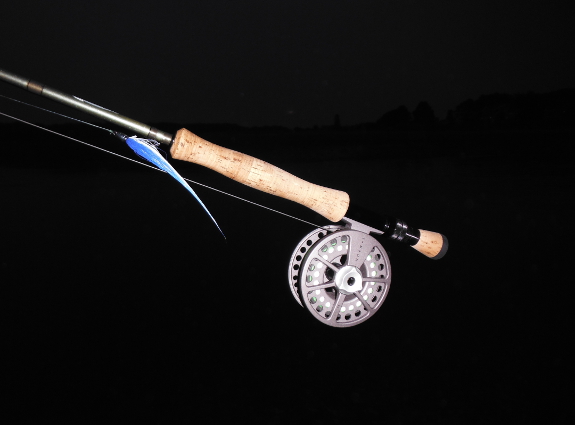
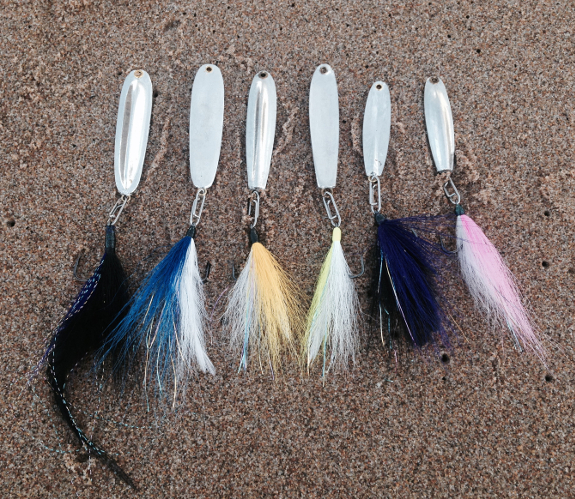
I arrived at “spot x” at dead low tide.  The sun was starting to set.  The wind was “castable”.  I fished the first hour of the incoming tide with Lefty Deceivers that I tied on Owner Aki hooks: pink/white, blue/white, and yellow/white.  After sunset, I switched to a blurple Clouser Minnow with chartreuse eyes.  OMG.  After casting Lefty Deceivers for an hour, the Clouser Minnow felt so different.  The night was dark.  I could not see my line on my forward cast or my back cast.  I could not see my fly land on the water.  I was casting blind. Literally! I had to “feel” my cast.  So, I switched back to one of my Left Deceivers and fished for another hour of the incoming tide.

Repel

I forgot my bug repellent.  The Maine mosquitoes love my Azorean skin.  They literately bit me off the sand.  🙁  When I return to “spot x” (which is a wicked fishy fly spot), I will have some day time Clouser Minnows!  And bug repellent!!  Fish and mosquitoes beware!!!

Facebooktwitterlinkedin

Fishing Structure: Light Transitions

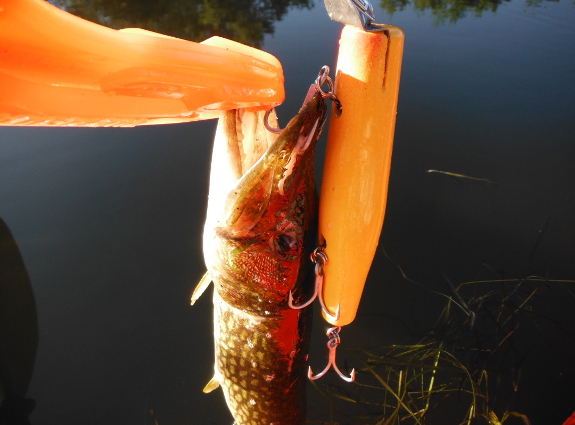
I had the opportunity today to fish a new section of the Nashua River. Without the aid of electronics, I exploited old school techniques to read the water, identify structure, and measure the varying depths of this section. As the sun was rising, the trees on the East bank kept part of the water dark with their shadows. The “light transition” was quite pronounced. I started my trip by trolling a Surf Asylum blunt nose swimming plug along the light transition. BANG! Something hit the plug hard that my rod nearly came out of my Yak Attack rod holder!!!

Fish360 Chain Pickerel

A lip gripper, a de-hooker, and a pair of pliers were all required to release the aggressive chain pickerel. The Nashua River monster swam away. I paddled away without injury. 🙂

I made my way upstream and found some froggy water. I explored this area thoroughly with an array of frogs. Nothing. 🙁

Fish360 Froggy Water

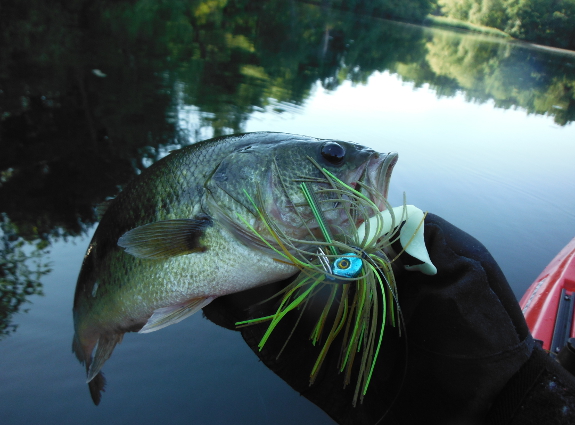
I shifted gears to fishing the light transition with a my fish finding spinner bait. Nothing. 🙁 I switched over to a Mags Lures 3/8 oz swim jig dressed with a Gary Yamamotto grub. Fish on!!!

Fish360 Largemouth bass

The chain pickerel weighed 2 oz less than the largemouth bass; but, it hit like a freight train and pulled three times harder than the bass! Two different species on the same trip and on the same pattern— now that’s something worth writing about! 😉

Facebooktwitterlinkedin

Custom Texas Rig

The Texas rig is a weedless soft plastic rig that has been catching fish for 60+ years. The weight in a Texas Rig is free to travel on your leader or line. Typically, this is not a problem. But, there are times that “pegging” (i.e. preventing the weight from traveling) is required. Commonly, this is done by using the tip of a toothpick. I prefer to secure the weight using the tag of an improved clinch knot.

Securing the weight using the tag end of an improved clinch knot is easy. First, tie an improved clinch knot to the extra wide gap (EWG) hook using a extra long tag end. Second, slide the leader and the tag end thought the weight. Third, pass the tag end around and through the weight two more times. Fourth, tie an overhand knot on the tag end as close to the top of the weight as possible.

Based on my field tests, this method does not negatively impact the action. In fact, I have found it to enhance the action of the soft plastic. The fish agree!! 😉

Facebooktwitterlinkedin

Public Access to the Waters of Massachusetts

I am often asked:”Where can I go fishing?” This simple question does not have a single simple answer. If you want to target saltwater and freshwater species in Massachusetts via boat, kayak, or canoe, then one answer is: Public Access to the Waters of Massachusetts.

Public Access to the Waters of Massachusetts

This guide book has 200+ sites for freshwater and saltwater. Each site has practical information:

  • Number of parking spaces
  • Type of ramp (e.g. concrete)
  • Number of launching lanes
  • Rights of Access
  • Predominant species

You can browse the sites by region:

  • Southeast
  • Northeast
  • Central
  • Connecticut Valley
  • Western

Or you can “search” the sites via city or town (Appendix I) or via site name (Appendix II).

The guide has 90 full color maps. Each full color map is easy to read and clearly indicates the access point and the protected open spaces and recreational lands.

The easiest way to currently get a copy is to send a check via U.S.P.S. to:

Office of Fishing and Boating Access
1 Rabbit Hill Road
Westborough, MA 01581

If you fish Massachusetts, then Public Access to the Waters of Massachusetts is required reading. 😉

Facebooktwitterlinkedin

Epic Surf Chunking!

My go-to surf spots for chunking have not been producing as they once were. Instead of complaining and blaming things like poaching and global warming, I started to search for new fishy spots. Using NOAA nautical charts, satellite imagery, and my fishing network, I found three wicked fishy spots! I took my friend, Brad Dillman, a member of the Plum Island Surfcasters, out surf chunking for the first time to one of these spots during the incoming tide of the August new moon.
Fish360 Wicked Chunking

We started chunking at sunset. The first two hours was dead slow. I only got a short strike from an aggressive bluefish that swam away with the tail end of the eel that I harvested. I took this as a sign and switched from dead eels to mackerel.

While sitting on my bucket, I felt a subtle bite. I lowered the tip of my rod and reeled slowly to set the Owner 10/0 SSW inline circle hook. I felt a subtle head shake. I reeled in the fish. OMG! A monster scup attacked my tasty mackerel chunk. Good thing I had 18″ of double stranded 90 lb wire leader connected to a 200 lb Ande monofilament leader!! 😉

Fish360 Wicked Chunking

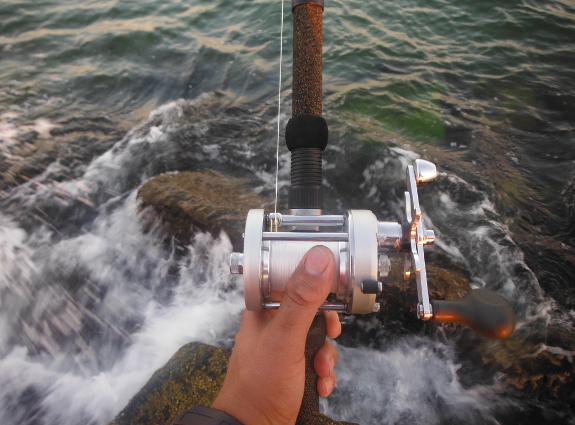
After the epic landing my monster scup, Brad switched over to mackerel. Fifteen minutes later, he felt a subtle bite. He lowered the rod I lent him and reeled in slowly to set the Owner 10/0 SSW inline circle hook. Fish on! The 10′ St. Croix Mojo Surf rod was fully arched. The drag of my ZeeBass ZX2-27 reel spooled with 400 yards of 50 lb braid slowed down the monster fish as it steadily swam with determination to line-cutting rocks. While keeping full pressure on the fish, Brad walked backwards. He was able to turn the fish. As he slowly walked back to water’s edge, he reeled in line with each step. At times, he literally could not move the fish; he could only hold on to the rod with all his might. This went on for fifteen minutes. When the fish was close, I pointed my light to the water to see what it was. Surprisingly, I could not see anything. Without warning, the fish turned it’s head and started to swim steadily off shore. All the line that Brad had gained was lost, and then some. Brad’s arms were exhausted. He handed me the rod.

Fish360 Wicked Chunking

When I felt the full weight of the fish, I yelled over to Brad “OMG! What did you hook?” I never felt anything like it before. I heard sounds of strain as the line was pulled off the spool and traveled through the guides. I fully expected the rod to snap at any time! When the fish finally stopped to take a respite, I walked backwards while keeping full pressure on the fish. I then walked forwards and reeled in line with each step. The fish was so big and powerful, I could not crank the reel by the knob on the handle; I had to palm the whole handle. The large gear in the ZeeBaas reel turned and put line back on the spool. Fifteen minutes later, I finally got the fish in close again. I pointed my light to the water to see what it was. Surprisingly, I could not see anything. No fin. No thrashing. Nothing. Without warning, the fish turned it’s head and started to swim steadily off shore. I held the rod firmly with exhausted arms while all the line that I gained was lost to a determined fish. This epic battle ended when the line went slack.

My ZeeBaas reel did not fail. The large gear put 39.5 inches of line on the spool with each crank. The smooth 40 lb drag kept the fish from swimming to the Azores. My St. Croix Mojo Surf rod, which was arched to it’s maximum, did not break. My bait rig did not fail. The Owner hook did not bend or break. So what failed? The main line: 50 lb braid. 🙁

During this epic mano-a-fish battle, the fish never surfaced. The runs were slow, steady, and determined. There was not even a single head shake! Based on this behavior, Andy Nabreski from On The Water and Roy Leyva from Shimano‘s Pro Staff, believe that this was a rough tail sting ray.

Fish360 Wicked Chunking

Photo Credit: NOAA

When I return to this spot, which I shall hence forth call “spot 50”, my main line will be 80 lb braid. Scup, bluefish, stripers, sharks, and rays beware! 😉

Facebooktwitterlinkedin

Charlie Graves Tins

Members of the Plum Island Surfcasters have been using Charlie Graves tins to catch striped bass for years. These lures are difficult to find. But, they available in various sizes and styles at Surfland Bait and Tackle.

Charlie Graves Tins

I am a big fan of flies on metals. I dress my Charlie Graves tins with my custom Lefty Deceiver flies. I use Tactical Anglers power clips to secure the fly to the tin. Why? Two reasons. First, they give the fly more action! Second, they make fly exchanges quick and easy!!

Charlie Graves tins are available with and without a keel. They are also available in tin and non-tin. I use the models with a keel in high current areas and the models without a keel in the surf. The tin and non-tin models function the same. But, I have a basis for the tin models.

If you fish the surf, then carry some Charlie Graves tins in your plug bag! Post your fish pics with #CharlieGravesTins. 😉

Facebooktwitterlinkedin

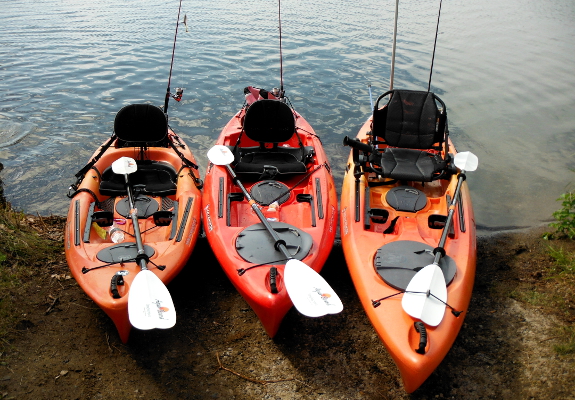
Selecting a fishing kayak

Fishing kayaks have come a long way in the last decade. This has benefited anglers. But, it has also made selecting a fishing kayak more challenging. There are now so many options! But, with three decisions, you can select a fishing kayak that is optimal for you! 😉

Fish360 Wilderness Systems Kayaks

The first decision you need to make is on the type of kayak. For fishing, I would recommend a sit-on-top (SOT) and not a sit-in-kayak (SIK). Why? SOTs have functional decks that can be configured to your fishing style and needs. SOTs are also less likely to fill with water. If you select a SIK, then get a manual bilge pump!

The second decision you need to make is on your kayak’s drive-train: paddle, peddle, or motor? A paddle driven kayak will catch as many fish as a peddle or motor driven kayak, but at a lower cost. Peddle and motor driven kayaks give you “hands free” fishing. The Hobbie peddle system will propel your kayak in a forward direction. The Native peddle system will propel your kayak forwards and backwards. In either case, you still need a paddle to turn your kayak left and right. The electric motors (e.g. Ocean Kayak or BassYaks) made for kayaks are limited by the capacity of the battery; they also add weight to the kayak. Bottom line, this decision is a matter of economics and personal preference.

The third decision is on the length of your kayak. Fishing kayaks are available in lengths between 10 and 16 feet. Shorter kayaks are lighter, easier to carry, and provide quick maneuverability on the water. The longer kayaks track and handle rough conditions well; but are heavier and more difficult to carry. A 12 or 13 foot kayak is a great all-around size that will cover nearly all the conditions that you would want to fish via kayak.

I personally like the fishing kayaks by Wilderness Systems. I own a Tarpon 100, a Ride 115, and a Ride 135. I like the quality and features of these kayaks: they have great stability; comfortable seats; well designed decks; and tracks that fit YakAttack mounts and accessories.

Facebooktwitterlinkedin

Nashua River: White Perch

This morning I went to the Nashua River (Harvard, Massachusetts section) to target bass. The last time I fished this spot was during the early evening hours (sunset). I found where the baitfish were holding. I saw hundreds of 3″ baitfish, complements of my polarized sunglasses.

Fish360 White Perch Kayak Fishing

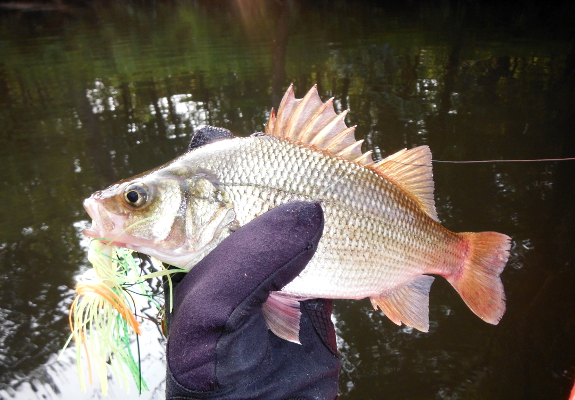
While fishing a 3/8 oz chartreuse / white spinner bait with tandem willow leaf blades and a Gary Yammammoto white grub as a trailer, a got a bump! I set the hook. Nothing. I slowed down my retrieve, bang! Fish on!! Large mouth bass? No. Small mouth bass? No. White perch? Yes!!!

This was my first white perch. This was also first fish on my new Wilderness Systems Ride 135 kayak.

Fish360 Kayak Fishing

A productive cut-out in the bank got filled in with sand carried by the current. This cut-out provided cover and a place for big bass to take a respite. While scouting for new structures, I found a deep hole near some un-welcoming sings. On my next trip, I will return to this spot when the sun is rising or setting. White perch and bass beware! 😉

Facebooktwitterlinkedin

Lead Free Bass Jigs

Lead (Pb) is a naturally occurring element in nature. The regulations regarding the use lead sinkers and jigs in freshwater fishing vary state by state. Science and politics aside, if you fish freshwater, it’s easier to simply use non-lead sinkers and jigs than wading through each state’s regulations. There are several non-lead sinkers on the market made from tin, steel, and tungsten (W). But, non-lead jigs are more challenging to find. That is until I met Shaun Vando from from Mags Lure Company at the Rocking Fishing and Hunting Expo this past January.

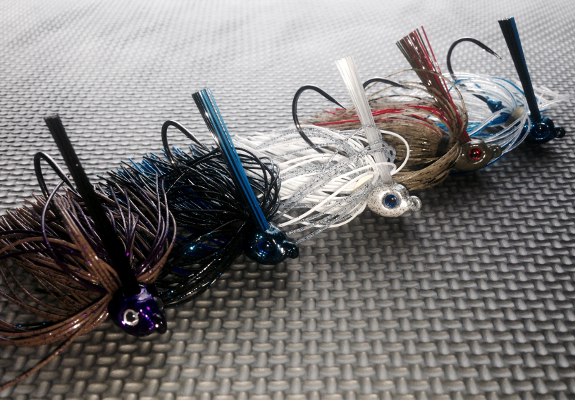
Fish360 Mags Lure Company Football Jigs

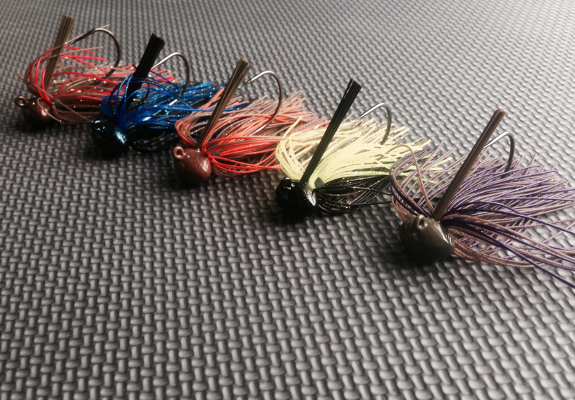
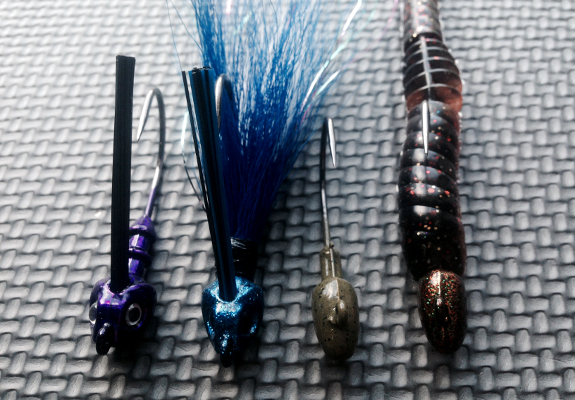
Shaun and his fishing / business partner developed a non-lead swim jig and football jig. The jig heads are made from molten pewter, a metal allow. They feature heavy duty Mustad hooks with bleeding sharp points and star flash round skirts. The strong paint finish, 3D eyes, and weed guard really enhance the jig’s fish catching ability.

Fish360 Mags Lure Company Swim/Flipping Jigs

The swim/flipping jigs are available in 11 different colors and the football jigs are available in 8 different colors. If you like to tie your own hair jigs (a.k.a. bucktails), then you can buy just the jig heads or the diamond jig heads in 4 standard colors. Custom colors are available upon request. 😉

 Fish360 Mags Lure Company Jigs

When it comes to quality, to say that I am critical and discriminating, is an understatement. I can say without hesitation that the quality and craftsmanship of the lead free bass jigs from Mags Lure Company exceeds my expectations. If you fish freshwater and you want to work the entire water column horizontally and vertically without breaking the law, then pick up some fish seducing jigs from Mags Lure Company. 😉

Facebooktwitterlinkedin

YakAttack Zooka Tube Rod Holders

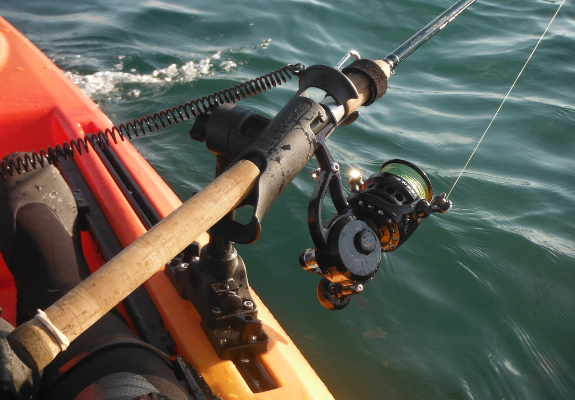
Fishing kayaks have come a long way in recent years. The days of drilling holes to install rod holders have passed. YakAttack makes tracks that can accommodate rod holders and other accessories. Some fishing kayaks (e.g. Wilderness Systems) have tracks pre-installed. There are several quality kayak rod holders on the market. But, the one that hooked my attention was the YakAttack Zooka Tube rod holder.

Fish360 YakAttack Kayak Rod Holders

I like the simple multi-functional design of the YakAttack Zooka Tube rod holder. The rod holder supports spinning and bait casting rods and has two different pedestal options: a rigid post mount with a MightyMount base or the flexible ball mount. The rigid post pedestal with a MightyMount base is ideal for trolling applications; particullary large predatory species.

Fish360 YakAttack Kayak Rod Holder

The flexible ball pedestal allows you to quickly position your rod to the optimal angle for what you are doing at any given time. The ball mount is strong; you can certainly use it for light trolling (e.g. fish less than 10 lbs).

Fish360 YakAttack Kayak Rod Holder

If you plan to troll and cast, and you had to pick one rod holder, I would suggest the YakAttack Zooka Tube rod holder with the rigid post pedestal and MightyMount base. If you are planning to cast and do some light trolling, then I would suggests the YakAttack Zooka Tube rod holder with the flexible ball pedestal. If you fish saltwater and freshwater, then get both. 😉

Facebooktwitterlinkedin