When the bites become hard to come by, I slip on a Gary Yamamoto Swim Senko. Spray on some shad scent. Make a long cast near structure. Fish on!




When the bites become hard to come by, I slip on a Gary Yamamoto Swim Senko. Spray on some shad scent. Make a long cast near structure. Fish on!
When I presented my Freshwater Surfcasting seminar this past June at the Plum Island Surfcasters, I covered a cross section of the presentations for targeting freshwater species. But! I failed to cover swim baits! Frankly, I had not fished them much. Until now! 😉
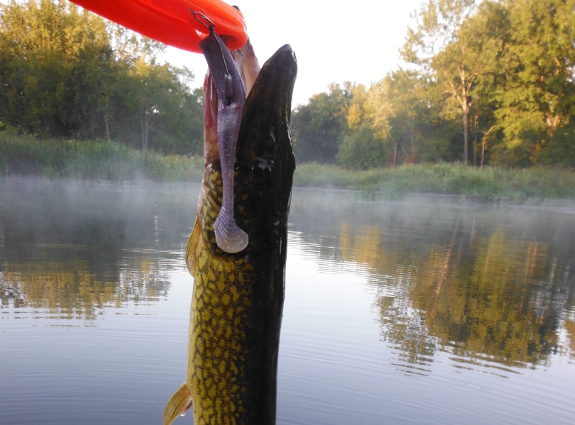
During my last trip to the Nashua River, I fished soft plastic swim baits in force. The first swim bait out of my Plano box was a Gary Yamamoto 5″ blue swim bait. I like the wide profile of this swim bait. I made on long cast up current along the shadowy river bank. Nothing! I made a second long cast. Fish on!! “OMG!! What did I hook?” Came to mind as I pulled in a lengthy 2 lb 1 oz chain pickerel.
I drifted with the current and continued to fish the shadowy shoreline. Nothing! I switched the color and profile of my presentation by switching to a Gary Yamamoto 5″ green pumpkin swim senko. My kayak got turned and was perpendicular with the current. Not an optimal postion to cast. Not wanting to lose my drift, I did a single handed side cast up current. I cranked the reel twice. Fish on! An aggressive large mouth bass hit the swim senko with a vengeance!

Swim baits is a large category of lures that encompasses wooden top water swimmers to deep swimming plastic swimmers with internal weights, and many baits in between. I really like the versatility and fish catching-ability of soft plastic swim baits. You can rig them weedless. You can weigh them to swim at the depth you need. I do a lot of surfcasting. So, making long casts up current and retrieving a swim bait just feels natural to me. I now carry a variety of swim baits in a Plano box that swim throughout the water column. I am still exploring these versatile lures. Stay tuned! 😉

I plan my fishing trips. I use satellite imagery, NOAA nautical charts, and lake maps. I read guide books and articles that cover the areas I fish. I review my on-the-ground photos and videos. I take time of year, time of day, moon phase, tide, and current into consideration. But! Today I had the unexpected opportunity to fish for two hours. No time to plan ahead of time. I packed my surf fly gear and developed a plan en route.
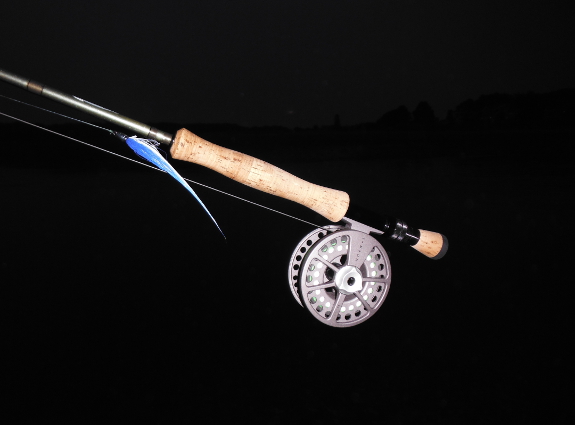
I arrived at “spot x” at dead low tide. The sun was starting to set. The wind was “castable”. I fished the first hour of the incoming tide with Lefty Deceivers that I tied on Owner Aki hooks: pink/white, blue/white, and yellow/white. After sunset, I switched to a blurple Clouser Minnow with chartreuse eyes. OMG. After casting Lefty Deceivers for an hour, the Clouser Minnow felt so different. The night was dark. I could not see my line on my forward cast or my back cast. I could not see my fly land on the water. I was casting blind. Literally! I had to “feel” my cast. So, I switched back to one of my Left Deceivers and fished for another hour of the incoming tide.

I forgot my bug repellent. The Maine mosquitoes love my Azorean skin. They literately bit me off the sand. 🙁 When I return to “spot x” (which is a wicked fishy fly spot), I will have some day time Clouser Minnows! And bug repellent!! Fish and mosquitoes beware!!!

I had the opportunity today to fish a new section of the Nashua River. Without the aid of electronics, I exploited old school techniques to read the water, identify structure, and measure the varying depths of this section. As the sun was rising, the trees on the East bank kept part of the water dark with their shadows. The “light transition” was quite pronounced. I started my trip by trolling a Surf Asylum blunt nose swimming plug along the light transition. BANG! Something hit the plug hard that my rod nearly came out of my Yak Attack rod holder!!!
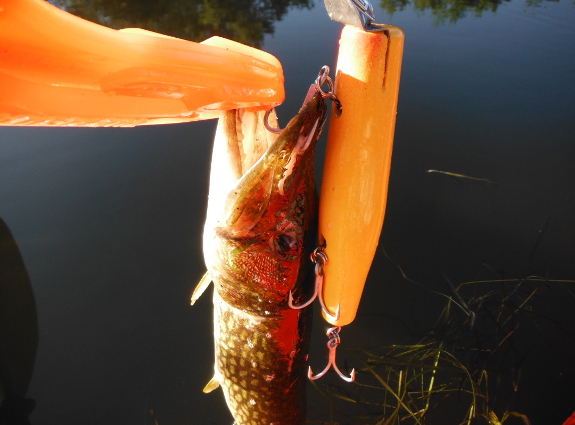
A lip gripper, a de-hooker, and a pair of pliers were all required to release the aggressive chain pickerel. The Nashua River monster swam away. I paddled away without injury. 🙂
I made my way upstream and found some froggy water. I explored this area thoroughly with an array of frogs. Nothing. 🙁
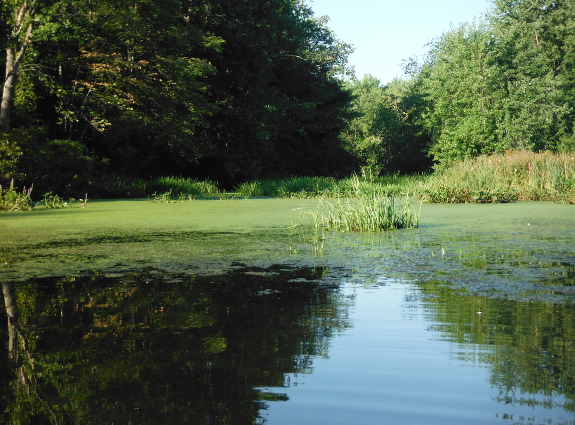
I shifted gears to fishing the light transition with a my fish finding spinner bait. Nothing. 🙁 I switched over to a Mags Lures 3/8 oz swim jig dressed with a Gary Yamamotto grub. Fish on!!!
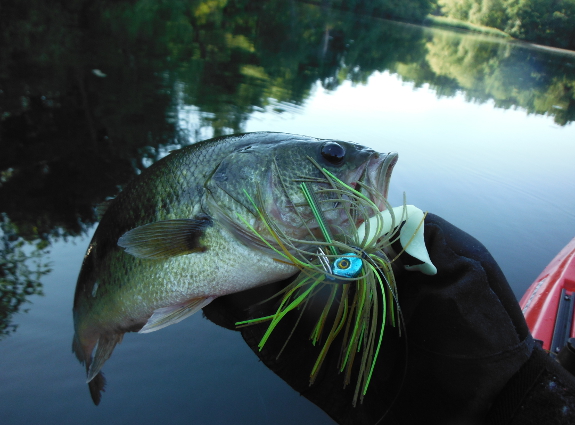
The chain pickerel weighed 2 oz less than the largemouth bass; but, it hit like a freight train and pulled three times harder than the bass! Two different species on the same trip and on the same pattern— now that’s something worth writing about! 😉

My go-to surf spots for chunking have not been producing as they once were. Instead of complaining and blaming things like poaching and global warming, I started to search for new fishy spots. Using NOAA nautical charts, satellite imagery, and my fishing network, I found three wicked fishy spots! I took my friend, Brad Dillman, a member of the Plum Island Surfcasters, out surf chunking for the first time to one of these spots during the incoming tide of the August new moon.
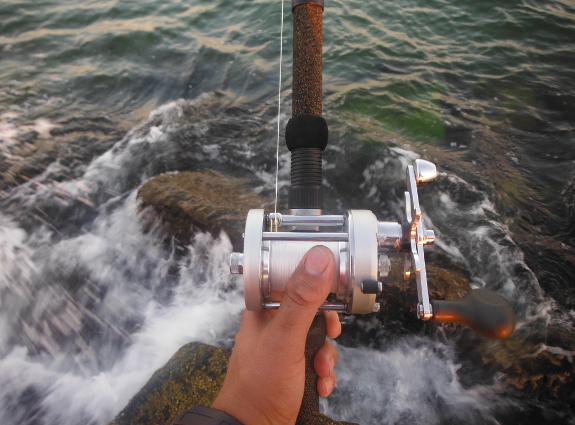
We started chunking at sunset. The first two hours was dead slow. I only got a short strike from an aggressive bluefish that swam away with the tail end of the eel that I harvested. I took this as a sign and switched from dead eels to mackerel.
While sitting on my bucket, I felt a subtle bite. I lowered the tip of my rod and reeled slowly to set the Owner 10/0 SSW inline circle hook. I felt a subtle head shake. I reeled in the fish. OMG! A monster scup attacked my tasty mackerel chunk. Good thing I had 18″ of double stranded 90 lb wire leader connected to a 200 lb Ande monofilament leader!! 😉

After the epic landing my monster scup, Brad switched over to mackerel. Fifteen minutes later, he felt a subtle bite. He lowered the rod I lent him and reeled in slowly to set the Owner 10/0 SSW inline circle hook. Fish on! The 10′ St. Croix Mojo Surf rod was fully arched. The drag of my ZeeBass ZX2-27 reel spooled with 400 yards of 50 lb braid slowed down the monster fish as it steadily swam with determination to line-cutting rocks. While keeping full pressure on the fish, Brad walked backwards. He was able to turn the fish. As he slowly walked back to water’s edge, he reeled in line with each step. At times, he literally could not move the fish; he could only hold on to the rod with all his might. This went on for fifteen minutes. When the fish was close, I pointed my light to the water to see what it was. Surprisingly, I could not see anything. Without warning, the fish turned it’s head and started to swim steadily off shore. All the line that Brad had gained was lost, and then some. Brad’s arms were exhausted. He handed me the rod.

When I felt the full weight of the fish, I yelled over to Brad “OMG! What did you hook?” I never felt anything like it before. I heard sounds of strain as the line was pulled off the spool and traveled through the guides. I fully expected the rod to snap at any time! When the fish finally stopped to take a respite, I walked backwards while keeping full pressure on the fish. I then walked forwards and reeled in line with each step. The fish was so big and powerful, I could not crank the reel by the knob on the handle; I had to palm the whole handle. The large gear in the ZeeBaas reel turned and put line back on the spool. Fifteen minutes later, I finally got the fish in close again. I pointed my light to the water to see what it was. Surprisingly, I could not see anything. No fin. No thrashing. Nothing. Without warning, the fish turned it’s head and started to swim steadily off shore. I held the rod firmly with exhausted arms while all the line that I gained was lost to a determined fish. This epic battle ended when the line went slack.
My ZeeBaas reel did not fail. The large gear put 39.5 inches of line on the spool with each crank. The smooth 40 lb drag kept the fish from swimming to the Azores. My St. Croix Mojo Surf rod, which was arched to it’s maximum, did not break. My bait rig did not fail. The Owner hook did not bend or break. So what failed? The main line: 50 lb braid. 🙁
During this epic mano-a-fish battle, the fish never surfaced. The runs were slow, steady, and determined. There was not even a single head shake! Based on this behavior, Andy Nabreski from On The Water and Roy Leyva from Shimano‘s Pro Staff, believe that this was a rough tail sting ray.

Photo Credit: NOAA
When I return to this spot, which I shall hence forth call “spot 50”, my main line will be 80 lb braid. Scup, bluefish, stripers, sharks, and rays beware! 😉

This morning I went to the Nashua River (Harvard, Massachusetts section) to target bass. The last time I fished this spot was during the early evening hours (sunset). I found where the baitfish were holding. I saw hundreds of 3″ baitfish, complements of my polarized sunglasses.
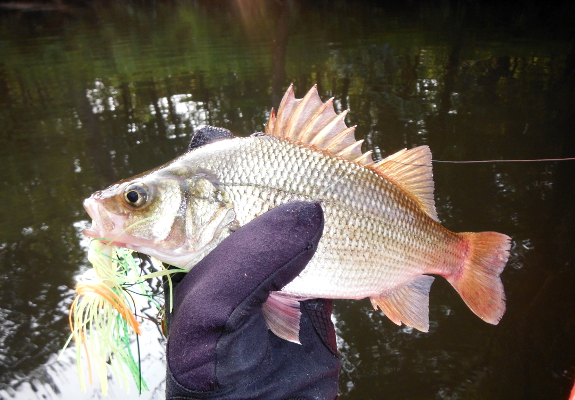
While fishing a 3/8 oz chartreuse / white spinner bait with tandem willow leaf blades and a Gary Yammammoto white grub as a trailer, a got a bump! I set the hook. Nothing. I slowed down my retrieve, bang! Fish on!! Large mouth bass? No. Small mouth bass? No. White perch? Yes!!!
This was my first white perch. This was also first fish on my new Wilderness Systems Ride 135 kayak.
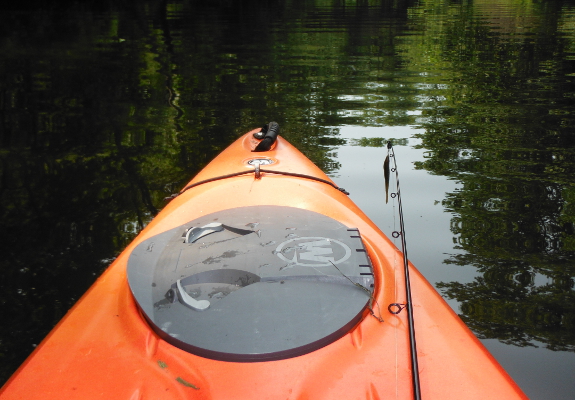
A productive cut-out in the bank got filled in with sand carried by the current. This cut-out provided cover and a place for big bass to take a respite. While scouting for new structures, I found a deep hole near some un-welcoming sings. On my next trip, I will return to this spot when the sun is rising or setting. White perch and bass beware! 😉

I fished the Winni Derby for the first time this year. Our boat was on the water by sunrise with more rods than anglers. We rode to our hunting grounds at high speed. An hour later, the engine unexpectedly stopped running and refused to start. The captain pulled out his TowBoatUS membership card and called for a tow via mobile phone. I give him our location (LAT / LONG) from my DeLorme InReach. The good news is that we got towed in safely. The bad news is that we were without a boat.
No boat? No problem! We got on our smart phones and searched the Internet. We found a marina with one boat to rent. Trip saved! We transferred all our gear and started trolling. Trolling using lead core lines and sinking fly lines for lake trout and salmon in 50 to 90 feet depths is vastly different from casting to structure. I learned a lot about this method. The lures of choice are metals (Mooselook Wobbler spoons, DB Smelt spoons) and flies. We used conventional reels with lead core lines and L.L. Bean 9’6″ 7 wt trolling fly rods with sinking lines and 6 ft 8 lb test leaders. Some anglers use cooper line!
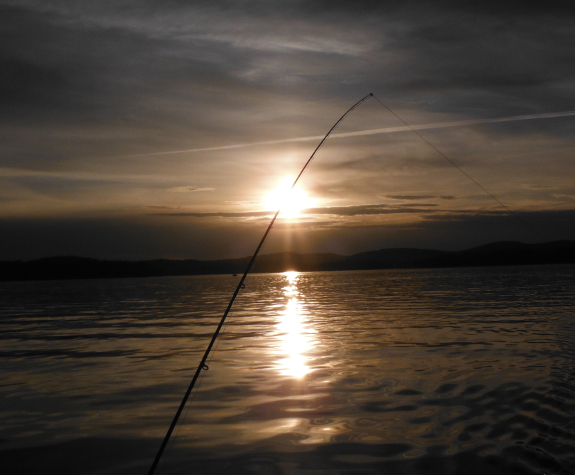
While we trolled four rods at back of the boat at 1 mile per hour, I went to the front of the boat and casted ahead of the boat. This allowed me to retrieve my presentation until the boat caught up to the lure. Sounds complicated, but the physics are actually simple.

While casting towards boulders the size of Volkswagons in 20+ feet of water, I worked an Ozzie Jig with a pink/white Lefty Deceiver pattern that I tied on a 3/0 Owner Aki hook. A small mouth bass of loc ness proportions emerged from the deep and tail slapped my jig! OMG! The profile on that fish was HUGE! The captain stopped the boat. I fan castted that whole area, multiple times, for the next hour. But, Wally was no where to be found. Yes. I named the fish Wally.
We trolled for salmon and trout and castted for bass for two days with a 2D map and no electronics or downriggers. We fished hard. But we got schooled! 🙁
After returning the boat to the marina, I grabbed my 9′ surf rod and Plano box of metals dressed with flies and walked down to our dock. I fan castted the whole area with the Ozzie Jig and fly that got Wally’s attention. Nothing! Not even a bump!! I switched to a 3/8 oz chrome/blue Kastmaster dressed with a blue/white Lefty Deceiver pattern that I tied on a 3/0 Owner Aki hook. BANG!! A small mouth full of attitude hit my presentation with a vengeance! It was Wally, Jr. 😉

I never trolled for trout and salmon. I learned a lot. The captain never fished Lake Winnipesauki. He learned a lot. And we both learned: Always have a plan B! 😉

I finally had the opportunity to fish the Waschusset Reservoir for the first time. Wow! What an amazing fishery. Unlike other freshwater fisheries, there is overwhelming shoreline access.
The 7 square miles of the reservoir is home to a multitude of species:
I brought a wide range of presentations. My strategy was to cover as much water as possible and fish the entire water column.
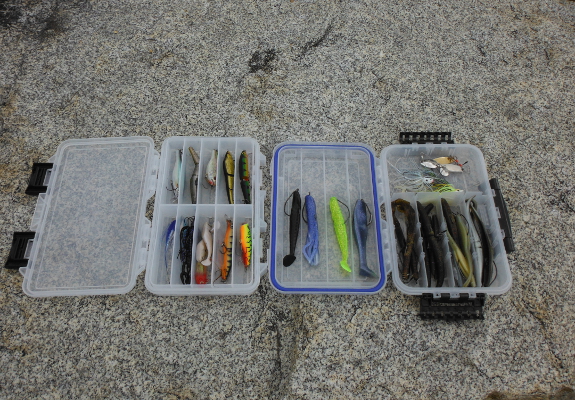
The first lure out of Plano boxes was a 3/8 oz blue/silver Acme Kastmaster with a blue/white Lefty Deceiver pattern that I tied on a 3/0 Owner Aki hook. Why?

I fished this presentation though the entire water column by adjusting the speed of my retrieve, the position of my rod tip, and the frequency and length of pauses during my retrieve. A long cast with a steady retrieve while pointing the tip of my rod toward my feed with periodic jerks and pauses produced the best result.
While dragging my Kastmaster along the bottom, I hooked something. It did not pull, but it had some resistance to it. It was someone’s fishing line. But, there was no one near me! I eventually pulled the entire line in. I kept the old fishing line in my AquaSkinz Cobra bag until I got back to the gate.
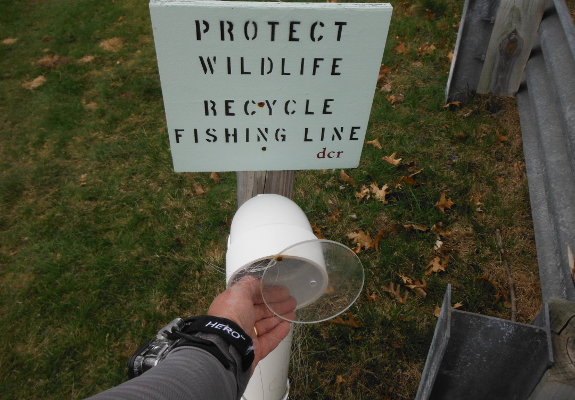
I am already planning my next trip to the Wachusset Reservior. If you have not fished it yet, I hope this article inspires you to go fish it! Just keep in mind that this is a shore only fishery: no boats and no ice fishing. Fishing is only allowed during daylight hours at the designated areas. Dogs are also not allowed. When you go, practice C.P.R.; leave only foot prints behind; and post your fishy pics to Wachussets Addicts, a great online community.

Fishing Cuttyhunk Island was not on my trips list this year. That is until a friend on Facebook dropped me a line. How could I possibly say no to fishing the September new moon on Cutttyhunk? Exactly! We took the Cuttyhunk Ferry over. I was impressed with their service. They welcome anglers!
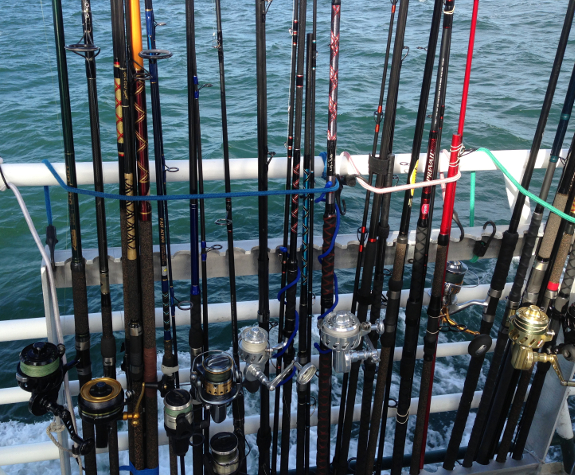
On this trip I discovered some new “flat top” rocks easily and safely accessible via wet suit. I also fished “my” rocks along the rock studded shore adjacent to Church’s beach. Fishing was great. Catching was tough.
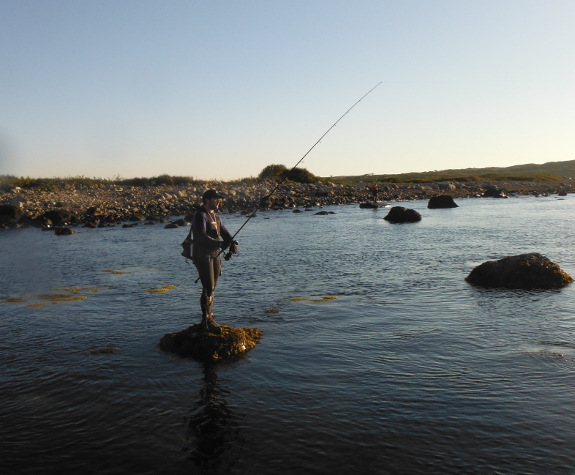
A quick review of my fishing journal revealed a pattern: spot “X”. Spot “X” is a point. But, not just any point. Anglers have walked away from this point with damaged 4X VMC treble hooks. This point has produced action when all other spots were void of fish. I fished this distant point with every night time striped presentation in my AquaSkinz Cobra bag. Nothing! OMG!! Not even a bump!!! I slipped on a red/white Robert’s Ranger with chartreuse / white hackle on siwash hook. My 11′ CTS S7 propelled the Robert’s Ranger “wicked fah” (in Boston speak). First cast. Nothing! Second cast. Bump!! Third cast. Fish on!!!
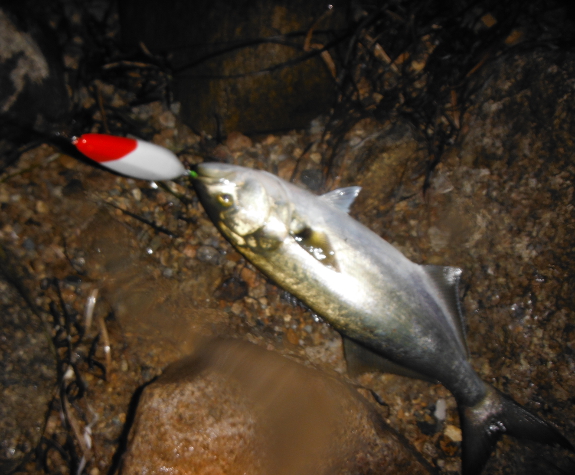
Short, long, and “wicked fah” casts all produce fish. The key is not distance; it’s the strike zone. But, when the strike is beyond a normal cast, you need professional gear to reach it. Thanks to my CTS S7 blank built by RH Custom Rods, I was able to put my Robert’s Ranger “day time” presentation in the strike zone of spot “X”. Use quality gear and think out side the (tackle) box. 😉

I have been exploring Maine for large mouth bass. My fishing journal has been indispensable for planning and managing my trips. A recent trip from my journal worth writing about is of a pond so remote that locals do not even know it exists! Access to this remote pond is via permissive trespass. Tread lightly and leave nothing but foot prints.
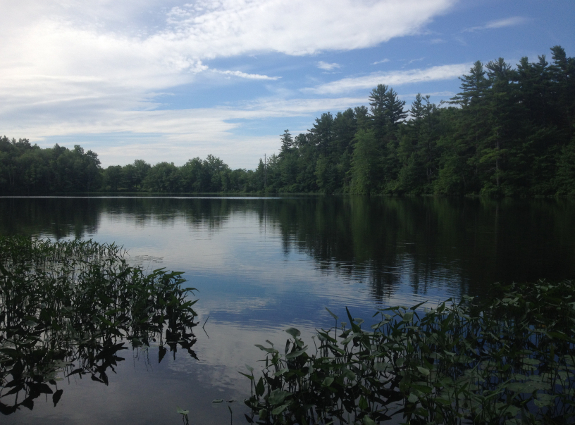
I started my trip by fishing the edges and vegetation. Nothing! So I formed a new strategy. I started fishing the deeper water with a Gary Yamamoto swim Senko (5″ Watermelon with black and red flakes). Bang! A fish hit the swim Senko with a vengeance. But dropped it before I could set the hook. I paused and let the bait sink a second time before I started a slow retrieve. Bang!! The fish hit the swim Senko again!! But dropped it again before I could set the hook!! I paused and let the bait sink a third time before I started a slow retrieve. Fish on!!!

My swim Senko got nearly split in two. This was my only swim Senko. My glue was miles away. I slipped on a Gary Yammamoto swim bait (3.5″ Cream white) onto my Tactical Anglers clip. Sprayed on some Yum shad scent. Made cast into the deeper water. And started a slow retrieve. Fish on!!!
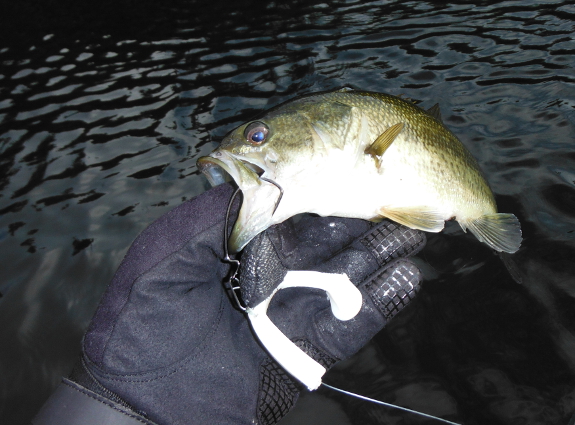
I fished a variety of baits on this trip. The fish really took a liking to the Gary Yamamotto baits. Will I bring a Plano box full of Gary Yamamoto baits on my next trip to this remote pond? Do fish swim?
