COVID-19

COVID-19
You crossed our borders
Under the blanket of night
Without invitation

COVID-19
You caused travel bans
And the TP Shortage of 2020

COVID-19
You separated families
You gave pain
And lonely death
Without funeral

COVID-19
You selected the wrong species
We adapt
We mask up
We social distance

COVID-19
You selected the wrong species
Our Doctors and Nurses responded without restraint
Our First Responders answered each call with urgency
Our Essential Workers drove our socio-economic machinery
Our Scientists developed vaccines
Our Elected Leaders collaborated
Our Businesses rewarded our heroes

COVID-19
You impacted my fishing
Hades comes for thee
R.I.P.

Facebooktwitterlinkedin

Striped Bass Hot Spots

Along the East coast, there are no shortage of striped bass hot spots. There are no secrete spots. From you mobile phone, you can view satellite images of any section of the Eastern coast line. I know more spots than I can possibly fish on a regular basis.
I fish spots based the spring and fall migrations of striped bass. All the spots I fish are based on my striped bass library. Some of the books in my library are out-of-print. If you want to expand your knowledge of striped bass hot spots, then I would encourage you to buy some of these books while they are still in print.

Fish360 Striped Bass Hot Spots

  1. Fishing Nantucket by Capt. Matt Reinemo
  2. Surfcasting Block Island and Cuttyhunk by D.J. Muller
  3. Surfcasting Around The Block by Dennis Zambrotta
  4. Striper Chronicles: East Coast Surf Fishing Legends & Adventures by Leo N. Orsi
  5. Fishing the Cape Cod Canal by D.J. Muller
  6. Seven Miles After Sundown: Surfcasting for Striped Bass Along the World Famous Cape Cod Canal by East End Eddie Doherty
  7. Fishable Wrecks and Rockpiles by Tim Coleman
  8. Flyfisher’s Guide to New England Coast: Rhode Island, Massachusetts, New Hampshire, and Maine by Tom Keer
  9. Fishing New England: A Rhode Island Shore Guide by Gene Bourque
  10. Fishing New England : A Cape Cod Shore Guide by Gene Bourque
  11. New England Stripers: A Fishing Anthology by Bill Brett
  12. Striper Hot Spots: New England by Frank Daignault
  13. Fishing the Connecticut and Rhode Island Coasts by Bob Sampson
  14. Fishing the Long Island Coast by Tom Melton
  15. Fishing the New Jersey Coast by Jim Freda
  16. Fishing the Delaware and Maryland Coasts by Andy Snyder
  17. Striper Hot Spots: Mid-Atlantic by Frank Daignault
Facebooktwitterlinkedin

Boat Name

During the build of my custom Gloucester Light Dory, I encountered many challenges. After several prototypes and exploiting colorful words from multiple languages to express my emotions, I conquered each challenge. Ironically, selecting a name for my boat was the most challenging of all. I had no shortage of boat names. For example, “Buoyancy Experiment”, since this was my first boat build. And “Portuguese Power”, since this is a row boat! A clever boat name is not enough to float my boat.

Fish360 Gloucester Light Dory

Argo was the name of an ancient Greek ship with fantastic features and capabilities. My custom Gloucester Light Dory has unique features, yes. But, this is not why I named my boat Argo. During the most critical phase of my boat build, I was leading a globally distributed software test automation team. The name of my team was: Argo. Around the time that I completed my boat build, my team merged with another team, and took on a new name. I hence named my boat Argo.

Facebooktwitterlinkedin

Sportfish Angler Data Collection Team (SADCT)

I learned about the Sportfish Angler Data Collection Team (SADCT) from Kim Trull during a Plum Island Surfcasters club meeting. Kim works at the Massachusetts Division of Marine Fisheries with other scientists who study the age of marine species by analyzing patterns in their scales. The data collected from this program is used by the Atlantic States Marine Fisheries Commission to protect our marine species.

Fish360 SADCT Scale Program

Collecting scale samples while sitting on a kayak or standing on a rock from a fish that you are going to release is not easy. For example, paper records will not work! I have developed a simple scale sample collection method.

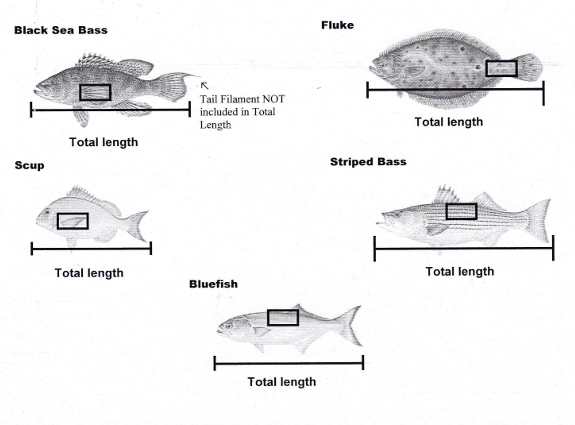
  1. I measure the length of the fish using a folding plastic yard stick ruler.
  2. I remove a eight scales from the appropriate area of the fish (which is species specific) via tweezers (which is on a lanyard) and put them in a snack sized Zip Lock bag.
  3. I write the species and length on the Zip Lock bag via Sharpie.
Fish360 SADCT Scale Program

When I get home, I put the scales into the provided scale sample envelopes and fill in the remaining information for each sample. I mail my samples via USPS to:

Division of Marine Fisheries – Gloucester Office
Attn: Kim Trull
30 Emerson Avenue, Gloucester, MA 01930

This will be my third years participating in this program. If you fish for striped bass, bluefish, black sea bass, fluke, or scup, then join us so we can help our dedicated scientists better understand our marine species and help our policy makers reach marine management decisions based on data that will benefit species and anglers.

Facebooktwitterlinkedin

Peter Johnson, Surfcasting Legend

I learned from social media that my friend Peter Johnson passed away. Peter was a worldly man. He graduated from Dartmouth College in New Hampshire. He served in the United States Military as a Navy Fighter Pilot. He planted himself on Martha’s Vineyard, where he grew deep roots. I first met Peter when I visited his Robert’s Rangers booth at the 2012 New England Saltwater Fishing Sow. The last time that I saw Peter was at last year’s MSBA Fishing Show. Our shared time was too short.

Fish360 Peter Johnson Robert's Rangers

Many business professionals are driven by profit. Peter was driven by providing a quality fishing lure that caught fish at an affordable price. He sold and shipped Robert’s Rangers to anglers all over the world. Each time I saw Peter, he had a new fishing story and a picture of a new species that was landed on a Robert’s Ranger. I am delighted that his family and friends will continue his legacy by running the company that he transformed through relationships and grit. My surf bag always has a Robert’s Rangers.

In the middle of a bluefish blitz he [Lance Dimock] caught a stripper on a Roberts Ranger. He had never seen a striper before in his life. The fish weighed 50 lbs..

— Ron Domurat, Three Decades of the The Derby

Peter was gentleman, a scholar, a savvy business person, and a sharpie surfcaster with overflowing generosity. I am sad that he is gone. I am a better person because of our conversations on fishing, family, business, and politics. We violently agreed on three of these topics and peacefully disagreed on the other.

Facebooktwitterlinkedin

Worcester County League of Sportsman’s Clubs Inc

While trolling through the isles at the New England Fishing Expo last month, I hooked up with the Worcester County League of Sportsman’s Clubs. The WCLSC has been serving sportsmen for 145 years. As a club of clubs, the WCLSC represents 53 clubs (25,000+ sportsmen).

The WCLS website has a new Event Calendar feature that allows you to find outdoor events and classes across central Massachusetts. I used this new feature to find Ice Fishing Tournaments happening this month. WCLS also has a monthly newsletter and a Facebook page. If you looking to get out and do something in the Nature’s playground, check them out!

Facebooktwitterlinkedin

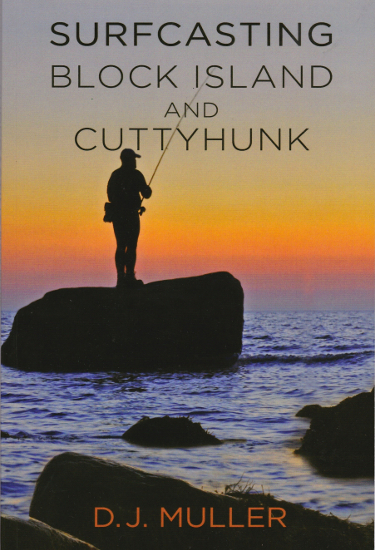
Surfcasting Block Island and Cuttyhunk

After surfcasting Block Island and Cuttyhunk extensively for many moons, DJ Muller has published: Surfcasting Block Island and Cuttyhunk. In this book, DJ transforms his first hand knowledge and experience into words. Like his previous four books, this new addition to the library of striped bass does not disappoint!

You cannot land a 50+ lb striped bass from the shores of Block Island and Cuttyhunk if you are dead! Safe Surfcasting is a must on these islands. DJ details the gear you need for safe surfcasting: wet suit, lights, knife, spiked boots, and insect replant. He also explains how to wade through boulder fields with oncoming waves and how to stand on a slippery rock with crashing waves.

Block Island and Cuttyhunk hold fish. This historical record proves this! To be effective, you need a map and a plan. DJ provides a map of each island and describes proven spots. DJ also shares stories of how he adapted his plan based on changing conditions and migration patterns.

DJ also provides a short history of Block Island and Cuttyhunk. I have read several articles and books on Cuttyhunk; DJ’s chapter is the fishiest! Understanding the history of these islands will increase your confidence whilst standing on a partially submerge rock with relentless waves crashing on your chest as your propel your plug towards Martha’s Vineyard under the blanket of darkness.

If you fish or plan to fish Block Island or Cuttyhunk Island, then Surfcasting Block Island and Cuttyhunk by DJ Muller is required reading. Literally!

Facebooktwitterlinkedin

Gray FishTag Research Northeast Striped Bass Study

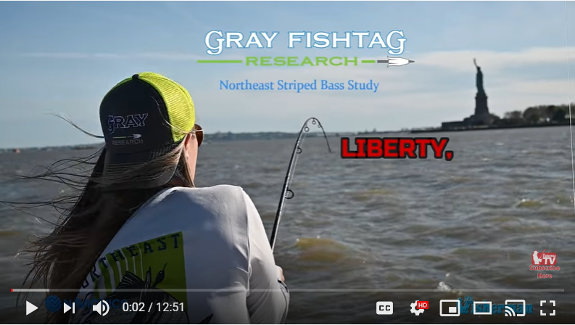
Gray FishTag Research (with the help of The Fisherman Magazine, Navionics, Rocket Charters, and Fin Chaser Charters) started a satellite tag study on striped bass in the Northeast.  On May 21, 2019, two striped bass were tagged with Wildlife Computer MiniPAT tags in New York’s Hudson River: “Liberty” and “Freedom”.

Gray FishTag Research Northeast Striped Bass Study

Unlike an analog “spaghetti tag”, the Wildlife Computer MiniPAT tag captures real time data:

  • Tracking Data: light-based geolocation
  • Diving Behavior: time-at-depth histograms
  • Temperature Profiles: profile of depth and temperature

Based on the data collected, scientists want to learn about the temperature profiles, depth profiles, and long term movements of striped bass.

On August 22, 2019, Freedom‘s tag washed up on Sagamore Beach in Massachusetts.  The analysis of the data is starting to paint an interesting picture.  However, data from additional fish is required to make scientific conclusions.

On October 22, 2019, Liberty‘s tag washed up along the beach at Loch Arbour in New Jersey.  The data is still being processed.  The results will be published next month.

This amazing study is only possible with collaborations, sponsors, and donations.  Each Wildlife Computer MiniPAT tag costs $5,000.00.  To help keep this study running, you can provide support via GoFundme or by shopping via Amazone Smile.Facebooktwitterlinkedin

Safe Surfcasting: Compass

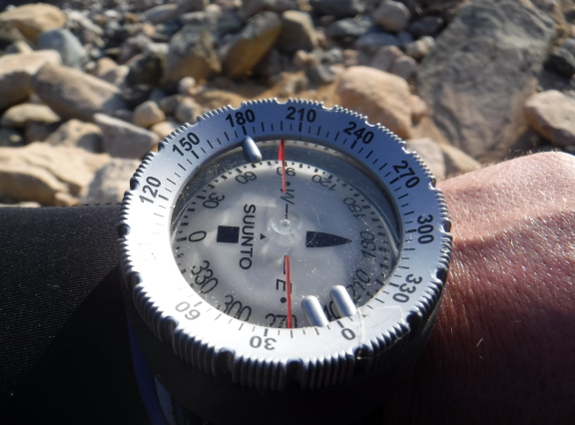
I like to surfcast remote spots.  These spots do not have paved roads or houses.  These spots look different under the cover of night.  I use my experience and a compass to orient my self.

Safe Surfcasting Compass

One night, my crew and I were fishing Cuttyhunk’s southwest point.  The wind and waves made the area nearly un-fishable.  After a hour of continuous casting without a bump, we decided to explore.  We waded across the Oyster Pond inlet.  The water was waist deep and moving fast. A misstep and we would have been skishing for oysters.

We fished the area for a couple of hours.  We caught schoolies and keepers.  When the bite died, we started to plan our next move.  Crossing the Oyster Pond Inlet was not an option, given the stage of the tide.  Walking around the East side of the island would have taken hours.  While one of my friends was draining water out of his head lamp, I noticed an unmarked trail. We jumped on the unmarked trail without knowing where it would lead us.  We came to a fork on the trail.  I used my wrist dive compass to decide which path to take.  The path lead us to another fork.  Again, I used my wrist dive compass.  We made our way back to Pete’s Place Rentals in record time.

I wear a Suunto SK8 dive compass on my wrist when I fish remote spots because it’s water proof and easy to read at night.  This compass keeps me safe and saves me time.  Never fish without a compass.

 Facebooktwitterlinkedin

Hooked Fishing Stories from the Surf

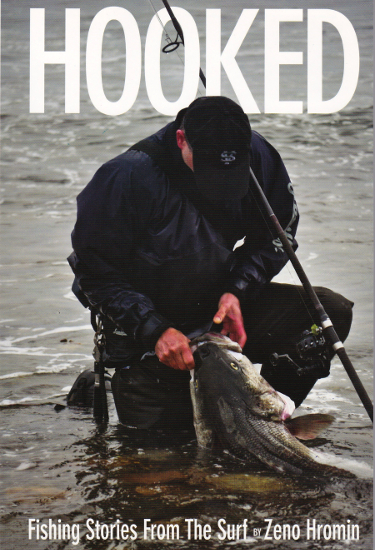
Zeno Hromin is a seasoned surfcaster who travels based on the migration patterns of striped bass.  In his book, Hooked Fishing Stories from the Surf, he shares stories of hooking and landing 20 lb, 30 lb, and 40 lb fish.  He also shares the real risks of surfcasting: bruises, scrapes, cuts, punctures, muscle cramps, broken bones, and death.  His stories are entertaining and educational.

Fish360 Zeno Hromin Hooked Fishing Stories from the Surf

Surfcasting locations like Montauk and Cuttyhunk is physically demanding.  The most important lesson that Zeno shares is: caffeine. Caffeine is surfcasting fuel.  Caffeine is also a diuretic.  Therefore, hydrate! Or suffer involuntary muscle contractions, head ache, and other feels-like-death symptoms. 🙁

Zeno writes like he speaks: honestly and openlly.  When I start reading a chapter, I am transported to Cutthunk or Montauk.  I am hooked and cannot put the book down until you finish the chapter.

If you think that surfcasting is not a sport, then read Hooked Fishing Stories from the Surf.  If you want to learn from others’ experiences and take your surfcasting to the next level, then read Hooked Fishing Stories from the Surf.  If you want to read fiction, then do not read Hooked Fishing Stories from the Surf.Facebooktwitterlinkedin